Comparison
Freeze dryer vs dehydrator
Published
Short answer
A dehydrator dries food with warm moving air, costs a few hundred dollars and suits fruit, vegetables, herbs and jerky that you eat within months to a year. A home freeze dryer freezes food and then removes the ice under vacuum, costs thousands, and keeps more of the food's shape and color, with much lower leftover moisture for long term storage. Most households are better served by a dehydrator; a freeze dryer makes sense for large gardens, long term pantries and whole meals.
Excalibur
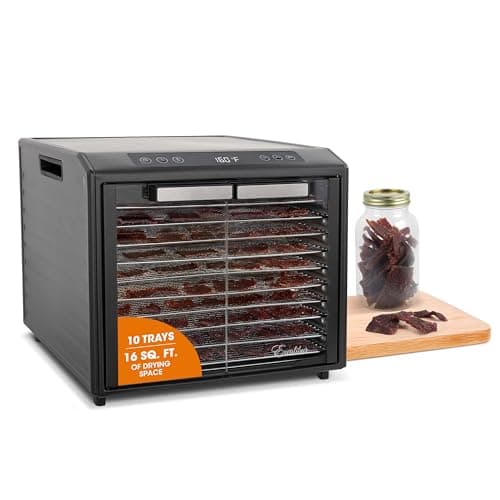
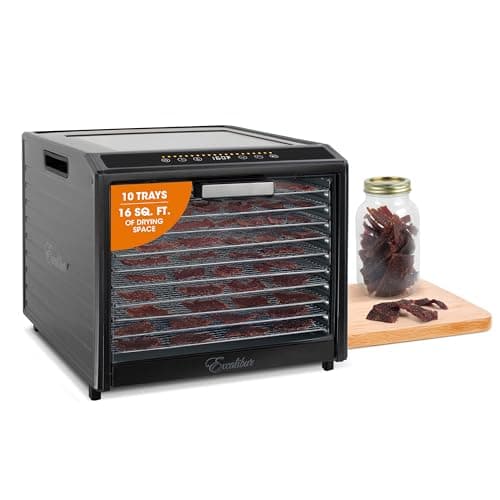
Excalibur Performance 10-Tray: 16 sq ft, stainless
See price on Amazon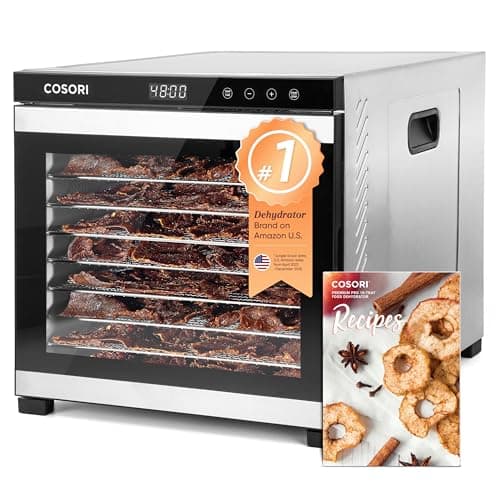
Cosori
Cosori 10-tray: 165 F max, 16.2 sq ft, 1 F steps
See price on Amazon
- Excalibur Performance 10-Tray: 16 sq ft, stainless
- Trays
- 10 stainless steel
- Cosori 10-tray: 165 F max, 16.2 sq ft, 1 F steps
- Trays
- 10 stainless steel, 15.6 x 15 in
| Pick | Trays | Price | Link |
|---|---|---|---|
| Excalibur Performance 10-Tray: 16 sq ft, stainless | 10 stainless steel | - | Amazon |
| Cosori 10-tray: 165 F max, 16.2 sq ft, 1 F steps | 10 stainless steel, 15.6 x 15 in | - | Amazon |
Facts are taken from each Amazon listing. Prices are checked daily and shown with their date.
Verdict
Most home cooks should buy a dehydrator: the Excalibur Performance Series 10-tray for its 85 to 165 F range and 80 hour timer, or the Cosori 10-tray for 16.2 sq ft of drying space at a lower price. Only move to a freeze dryer if you want multi-year pantry storage of whole meals and can absorb a purchase price in the thousands.
This page is for anyone deciding between a food dehydrator and a home freeze dryer, or wondering whether the jump in price is worth it. We compare how each method removes water, the purchase and running cost, the texture you get, how long the food keeps according to published sources, and which foods suit each machine. Dehydrator examples come from our catalog: the Excalibur Performance Series 10-tray and the Cosori 10-tray. Freeze dryer figures come from the Blue Alpine Medium and VEVOR freeze dryer listings, and storage claims are labeled as maker claims where they are not USDA or NCHFP figures.
How each method removes water
A dehydrator blows warm air over food on trays. Heat turns water into vapor at the food surface and the airflow carries it away. Food shrinks, darkens a little and turns leathery or crisp depending on how long it runs. Typical dehydrator ranges run from about 85 to 165 F; the Excalibur listing states 85 to 165 F and the Cosori listing 95 to 165 F.
A freeze dryer first freezes the food solid, then a vacuum pump lowers the chamber pressure so the ice turns straight into vapor (sublimation) while gentle shelf heat supplies energy. The vapor freezes onto a cold condenser. Because the water leaves as ice rather than liquid, the food keeps much of its original shape and an open, porous structure. The VEVOR listing, for example, mentions a cold trap at -35 C and a vacuum pump. Our how a freeze dryer works page walks through each stage.
- 1FreezeTrays chill well below freezing so the water in the food turns to ice.
- 2Vacuum pullThe pump lowers the chamber pressure until ice can turn straight to vapor.
- 3Primary dryingShelf heaters add gentle heat. Ice sublimates and the vapor freezes onto the cold condenser.
- 4Final dryWarmer shelves drive off the last bound moisture before the batch ends.
Cost to buy and run
The price gap is large. The two dehydrators below are listed at $379.99 and $269.99. The Blue Alpine Medium Select freeze dryer is listed at $3,495.00 and the VEVOR freeze dryer at $3,293.91. Freeze dryers also run long batches with a compressor and vacuum pump, and pumps with oil need regular oil care; see freeze dryer vacuum pump oil. For a full breakdown, read how much a freeze dryer costs.
Excalibur Performance Series 10-Tray
TypeDehydrator
Capacity in the listing10 stainless trays, 16 sq ft
Controls in the listing85 to 165 F, up to 80 hours
Listed price at writing$379.99
Cosori 10-Tray
TypeDehydrator
Capacity in the listing10 stainless trays, 16.2 sq ft
Controls in the listing95 to 165 F, 48 hour timer
Listed price at writing$269.99
Blue Alpine Medium Select
TypeFreeze dryer
Capacity in the listing10 to 15 lb of food per batch
Controls in the listingNot stated in the listing
Listed price at writing$3,495.00
VEVOR Vacuum Freeze Dryer
TypeFreeze dryer
Capacity in the listing8.8 to 13.2 lb per batch, 4 trays
Controls in the listingTouch screen, programmable temperature
Listed price at writing$3,293.91
| Machine | Type | Capacity in the listing | Controls in the listing | Listed price at writing |
|---|---|---|---|---|
| Excalibur Performance Series 10-Tray | Dehydrator | 10 stainless trays, 16 sq ft | 85 to 165 F, up to 80 hours | $379.99 |
| Cosori 10-Tray | Dehydrator | 10 stainless trays, 16.2 sq ft | 95 to 165 F, 48 hour timer | $269.99 |
| Blue Alpine Medium Select | Freeze dryer | 10 to 15 lb of food per batch | Not stated in the listing | $3,495.00 |
| VEVOR Vacuum Freeze Dryer | Freeze dryer | 8.8 to 13.2 lb per batch, 4 trays | Touch screen, programmable temperature | $3,293.91 |
Texture, taste and rehydration
Dehydrated food is dense and chewy or crisp: think raisins, fruit leather, dried peppers and jerky. It rehydrates slowly and often never fully returns to its fresh texture. Many people like it that way, especially for snacks.
Freeze dried food is light, airy and crunchy, keeps its color well and rehydrates quickly because water can flow back into the open pores. That makes it a good fit for whole cooked meals, dairy-based foods and novelty foods such as freeze dried candy. Fatty foods and pure sugar syrups do not freeze dry well, and very high fat items keep poorly in either method.
Moisture left and storage life
Freeze drying leaves far less water in food than air drying does, which is the main reason for its longer storage claims. Here is what published sources say, kept separate from manufacturer claims.
- Frozen at 0 FSafe indefinitely; best quality 1 to 12 months by foodUSDA FSIS
- Vacuum sealedSame freezer times, less freezer burnUSDA FSIS
- Home cannedBest quality within 1 year, cool and darkNCHFP
- Home driedFruit about 1 year at 60 F, 6 months at 80 FNCHFP
- Freeze driedUp to 25 years in mylar with an oxygen absorberMaker claim
- Home dried fruit (NCHFP): most dried fruits keep about 1 year at 60 F and about 6 months at 80 F. Dried vegetables keep about half as long as fruits.
- Home dried jerky (USDA FSIS): about 1 to 2 months at room temperature.
- Freeze dried food (maker claims only): Harvest Right states up to 25 years when sealed in mylar with an oxygen absorber; the Blue Alpine listing states a 30 year shelf life. These are manufacturer claims, not USDA or NCHFP figures.
Note.Neither method makes unsafe food safe. Freeze drying and low temperature drying do not reliably kill bacteria. USDA advises heating meat for jerky to 160 F and poultry to 165 F before or during drying, and raw freeze dried meat should be handled and cooked like raw meat.
Which foods suit each method
See what you can dehydrate and the dehydrator temperature chart for settings, or the freeze dryer time chart for batch planning.
Apples, bananas, berries
DehydratorGood, chewy or crisp
Freeze dryerGood, crunchy and light
Herbs
DehydratorGood, low heat
Freeze dryerWorks, but rarely worth the cycle
Jerky
DehydratorClassic method
Freeze dryerNot the usual choice
Whole cooked meals, soups
DehydratorPossible but slow to rehydrate
Freeze dryerStrong fit, rehydrates quickly
Dairy, eggs
DehydratorNot recommended at home
Freeze dryerCommonly freeze dried by home users
Candy
DehydratorNo
Freeze dryerPopular use
| Food | Dehydrator | Freeze dryer |
|---|---|---|
| Apples, bananas, berries | Good, chewy or crisp | Good, crunchy and light |
| Herbs | Good, low heat | Works, but rarely worth the cycle |
| Jerky | Classic method | Not the usual choice |
| Whole cooked meals, soups | Possible but slow to rehydrate | Strong fit, rehydrates quickly |
| Dairy, eggs | Not recommended at home | Commonly freeze dried by home users |
| Candy | No | Popular use |
How to choose
If you are leaning toward freeze drying, read is a freeze dryer worth it and what size freeze dryer you need. For a wider view that includes canning and freezing, see food preservation methods compared.
- 1
Decide how long you need food to keep. Months to a year points to a dehydrator; multi-year pantry storage points to a freeze dryer.
- 2
List what you will process. Snacks, herbs and jerky suit a dehydrator; full meals and dairy suit a freeze dryer.
- 3
Check space, power and noise. Freeze dryers are large, heavy and run for long cycles.
- 4
Set a budget that includes packaging such as mylar bags, oxygen absorbers and a sealer.
Frequently asked questions
Is freeze dried food healthier than dehydrated food? Freeze drying uses little heat, so it tends to keep color and some heat-sensitive nutrients better. Both methods keep most of the food's fiber and minerals.
Can a dehydrator freeze dry food? No. A dehydrator has no freezer or vacuum pump, so it can only air dry with warm air.
How should I store dried or freeze dried food? Keep it in airtight, moisture-proof packaging in a cool, dark, dry place. See how to store freeze dried food and the oxygen absorber size chart.
Is a freeze dryer worth it for a small household? Often not, given the price. A good dehydrator plus a freezer and vacuum sealer covers most needs for far less money.