Explainer
What can you dehydrate in a food dehydrator?
Published
Short answer
A food dehydrator handles most fruits, vegetables, herbs, lean meat jerky, fruit leathers, and homemade pet treats, and some box models can also proof bread or make yogurt. Foods that dry poorly or are not recommended for home drying include high fat foods like avocado and fatty meats, dairy such as milk, butter and cheese, and eggs. Dry each food at the temperature tested guidance recommends.
Gear for this job
All 7 picks compared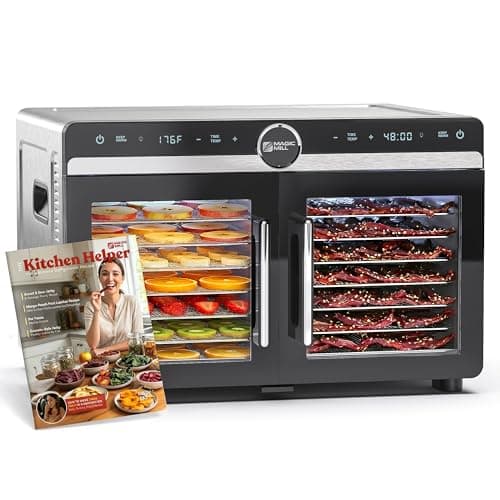
Magic Mill DualZone: 16 trays in two chambers
See price on AmazonSee it on Amazon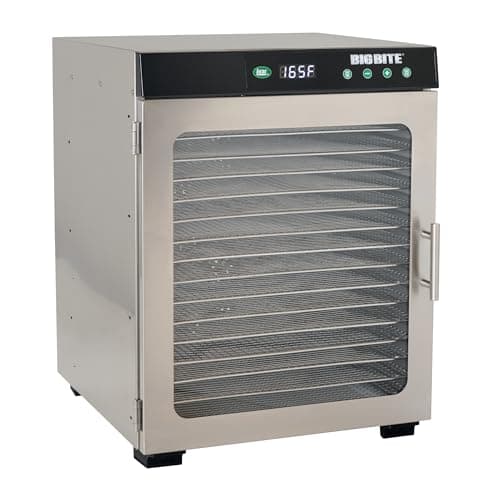
LEM BigBite 16-Tray: 19 sq ft, 1200 watts
See price on AmazonSee it on Amazon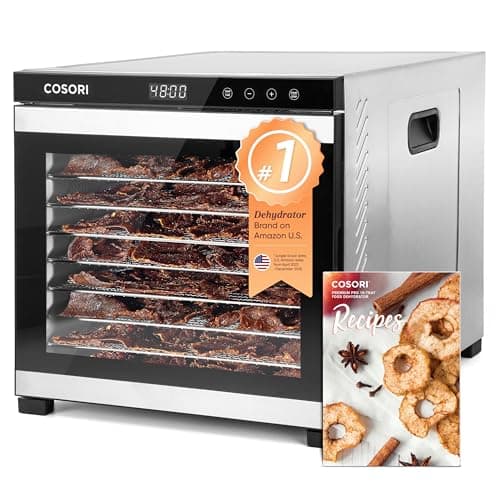
Cosori 10-Tray: 16.2 sq ft of stainless trays
See price on AmazonSee it on Amazon
This page is for new dehydrator owners and anyone deciding whether a dehydrator earns its counter space. We list what dries well, with the usual prep and temperatures from NCHFP and USDA guidance, cover jerky safety, and flag foods that do not dry well or safely at home. We also cover storage, since dried food only keeps if it is properly dry and packed. For the bigger picture, see freeze dryer vs dehydrator and our dehydrator temperature chart.
How a dehydrator works
A dehydrator blows warm, dry air across thin pieces of food. The warm air pulls moisture out of the food, and the fan carries it away. Low, steady heat keeps food from cooking while it dries. Box style units with a rear fan push air across every tray evenly; stackable round units blow air up or down through the stack and often need trays rotated.
Even airflow and accurate temperature control matter more than wattage. See horizontal vs vertical airflow dehydrators if you are choosing one.
What dries well
These foods are popular for a reason: they dry reliably and store well when properly dried.
Fruits (apples, bananas, peaches, berries)
Typical prepSlice evenly; dip light colored fruit in ascorbic acid or lemon juice to limit browning
Typical temperature (NCHFP or USDA guidance)About 140 F
Vegetables (carrots, peppers, corn, green beans, mushrooms)
Typical prepMost need blanching first; peppers and onions do not
Typical temperature (NCHFP or USDA guidance)About 140 F
Herbs (basil, oregano, mint, thyme)
Typical prepRinse, shake dry, use whole leaves or sprigs
Typical temperature (NCHFP or USDA guidance)95 to 115 F; up to 125 F in humid areas
Jerky (lean beef, venison, poultry)
Typical prepTrim fat, slice thin, marinate, heat to safe internal temperature
Typical temperature (NCHFP or USDA guidance)Heat meat to 160 F (poultry 165 F), dry at 145 to 155 F
Fruit leather
Typical prepPuree fruit, spread thin on lined trays
Typical temperature (NCHFP or USDA guidance)About 140 F
Pet treats (sweet potato, lean meat)
Typical prepSlice thin; treat meat like jerky
Typical temperature (NCHFP or USDA guidance)As for the food used
| Food | Typical prep | Typical temperature (NCHFP or USDA guidance) |
|---|---|---|
| Fruits (apples, bananas, peaches, berries) | Slice evenly; dip light colored fruit in ascorbic acid or lemon juice to limit browning | About 140 F |
| Vegetables (carrots, peppers, corn, green beans, mushrooms) | Most need blanching first; peppers and onions do not | About 140 F |
| Herbs (basil, oregano, mint, thyme) | Rinse, shake dry, use whole leaves or sprigs | 95 to 115 F; up to 125 F in humid areas |
| Jerky (lean beef, venison, poultry) | Trim fat, slice thin, marinate, heat to safe internal temperature | Heat meat to 160 F (poultry 165 F), dry at 145 to 155 F |
| Fruit leather | Puree fruit, spread thin on lined trays | About 140 F |
| Pet treats (sweet potato, lean meat) | Slice thin; treat meat like jerky | As for the food used |
Note.Temperatures vary by dehydrator. Follow tested guidance for each food and your machine's manual.
Jerky: the food safety step
Drying alone may not reach temperatures high enough to kill bacteria in meat. USDA FSIS recommends heating meat to 160 F, or poultry to 165 F, before or at the start of drying, then keeping the dehydrator at a steady 130 to 140 F or higher throughout drying; NCHFP suggests 145 to 155 F. Many dehydrator owners steam or oven heat strips before drying, or follow a tested recipe that includes a post drying oven step.
Use lean meat, trim visible fat, and keep raw meat refrigerated while marinating. Jerky made at home keeps about 1 to 2 months at room temperature according to FSIS, longer in the freezer. Our step by step guide is how to make jerky in a dehydrator, and the best dehydrators for jerky guide covers machines with the needed heat range.
Note.Wild game can carry parasites and bacteria. Follow USDA and NCHFP guidance for game jerky, and never skip the heating step.
Other useful jobs
Beyond basic drying, a dehydrator can make powders from dried vegetables or fruit, crisp crackers made from seeds, dried citrus for drinks and garnish, and dried flowers or crafts. Some box style dehydrators with low settings are used for proofing bread dough or incubating yogurt. Check your manual for low temperature uses before trying them.
- Vegetable powders for soups and sauces
- Fruit powders for smoothies and baking
- Dried citrus wheels
- Seed crackers and granola
- Proofing dough on low temperature models
- Dried herbs for tea and cooking; see how to dehydrate herbs
Foods that do not dry well or safely
Some foods either turn out poorly or carry risks when dried at home.
For high fat foods and dairy, a freeze dryer or freezer is a better fit. Freeze drying removes more moisture, though fatty foods still have a shorter storage life.
- High fat foods: avocado, olives and fatty meats dry poorly and go rancid quickly.
- Dairy: milk, butter and cheese are not recommended for home drying because of fat content and bacterial risk.
- Eggs: home drying is not recommended because of Salmonella risk; commercial dried eggs are made with specialized equipment.
- Very watery foods: cucumbers and lettuce can be dried but shrink to almost nothing.
- Sugary sauces and syrups: tend to stay sticky; see dehydrated fruit still sticky.
Storing dried food
Cool dried food fully, then pack it in airtight containers, such as glass jars, vacuum sealed bags or mylar. For fruits, NCHFP suggests conditioning: pack loosely in a jar for about a week and shake daily, to even out remaining moisture and spot any condensation that means more drying is needed.
Storage life is about quality. NCHFP notes most dried fruits keep about 1 year at 60 F and about 6 months at 80 F, and dried vegetables about half as long. Keep containers cool, dark and dry. Our storage life table has more. To shop for a machine, start with our best food dehydrators.
- Frozen at 0 FSafe indefinitely; best quality 1 to 12 months by foodUSDA FSIS
- Vacuum sealedSame freezer times, less freezer burnUSDA FSIS
- Home cannedBest quality within 1 year, cool and darkNCHFP
- Home driedFruit about 1 year at 60 F, 6 months at 80 FNCHFP
- Freeze driedUp to 25 years in mylar with an oxygen absorberMaker claim
Frequently asked questions
What is a food dehydrator good for? Drying fruits, vegetables, herbs, jerky, fruit leather and pet treats for snacks and pantry storage, with low steady heat and airflow.
Can you dehydrate cheese at home? Home drying of dairy is not recommended because of fat and bacterial risk. Commercially dried cheese products are made with specialized processes.
Do vegetables need blanching before drying? Most do. Blanching stops enzyme action that causes off flavors and color loss. Onions, peppers and mushrooms are common exceptions.
How do I know food is dry enough? Fruits should be leathery and pliable with no moisture when torn. Vegetables should be brittle or crisp. Jerky should bend and crack but not snap.