Explainer
How much does a freeze dryer cost?
Published
Short answer
Home freeze dryers are one of the most expensive pieces of food preservation gear you can buy. Current listings for medium home units sit in the low to mid thousands of dollars, and large units cost more. On top of the purchase price, budget for electricity on every 20 to 40 hour batch, vacuum pump oil if your pump uses it, and mylar bags and oxygen absorbers for storage.
Gear for this job
All 6 picks compared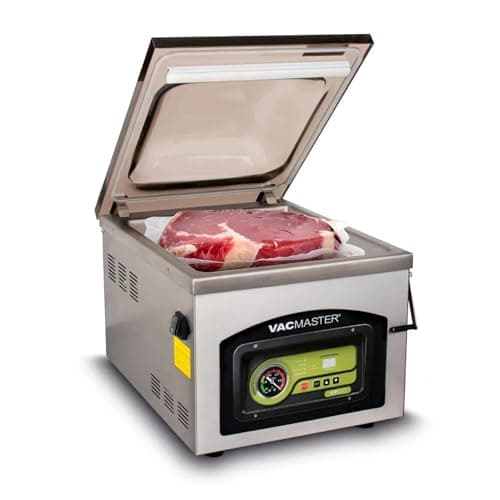
VacMaster VP230: double seals 3 to 7 mil Mylar
See price on AmazonSee it on Amazon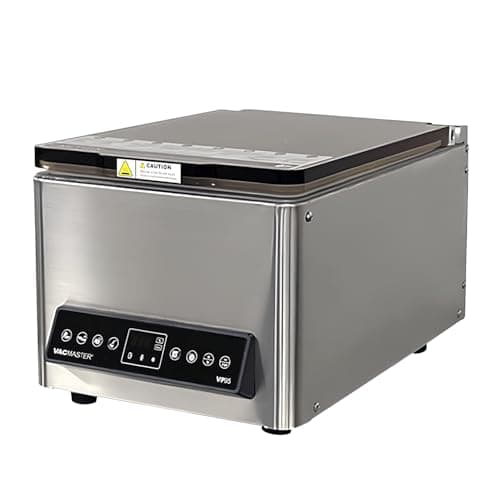
VacMaster VP95: 5 and 7 mil mylar on a compact oil pump
See price on AmazonSee it on Amazon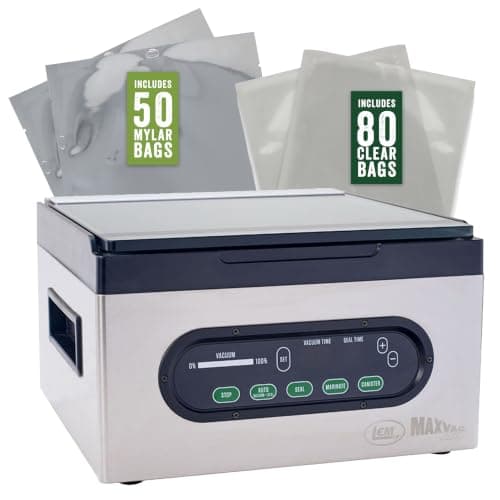
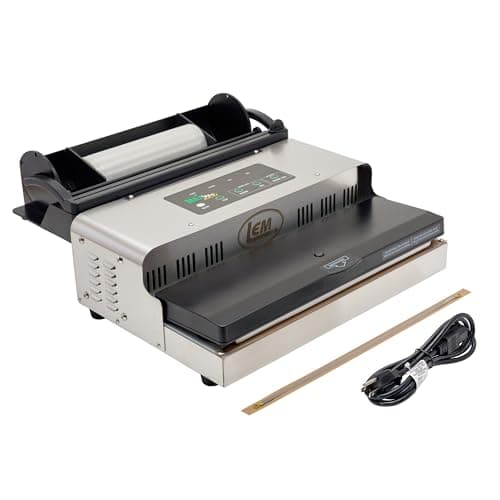
LEM MaxVac Pro: chamber sealer bundled with 50 Mylar bags
See price on AmazonSee it on Amazon
This page is for anyone pricing a home freeze dryer for the first time and wondering why the number is so high. It covers what drives the purchase price, how size changes it, and the running costs that come after the box arrives: electricity, pump maintenance, packaging and the space and circuit the machine needs. Prices change often, so treat any figure here as a snapshot and check the current listing before you buy. If you are still deciding whether to buy at all, read is a freeze dryer worth it after this.
Why freeze dryers cost so much
A home freeze dryer is three machines in one cabinet. It has a refrigeration system that drops the chamber well below freezing, a vacuum pump that pulls the chamber down to a very low pressure, and heated shelves that gently warm the trays so ice turns straight to vapor. The ice then refreezes on the cold chamber walls, which act as a condenser. A controller runs all of this on its own for a day or more.
Each of those parts costs real money to build, and home units are made in much smaller numbers than refrigerators or ovens. That is the main reason the price sits far above a food dehydrator, which is just a heater and a fan. For a plain explanation of the cycle, see how a freeze dryer works.
- 1FreezeTrays chill well below freezing so the water in the food turns to ice.
- 2Vacuum pullThe pump lowers the chamber pressure until ice can turn straight to vapor.
- 3Primary dryingShelf heaters add gentle heat. Ice sublimates and the vapor freezes onto the cold condenser.
- 4Final dryWarmer shelves drive off the last bound moisture before the batch ends.
Purchase price by size
Home freeze dryers are sold in small, medium and large sizes, usually measured by how many pounds of fresh food a batch holds and how many trays it has. Price rises with size because the chamber, the refrigeration system and the pump all get bigger. Here are a few current listings so you can see the range. They are listing prices on the day this page was written, not a promise of today's price.
Blue Alpine Medium Select
Batch size per listingMedium home unit
Listing price$3,495.00
VEVOR Vacuum Freeze Dryer, 4 trays
Batch size per listing8.8 to 13.2 lb per batch
Listing price$3,293.91
Harvest Right small, medium, large
Batch size per listingVaries by size
Listing priceCheck harvestright.com
| Model | Batch size per listing | Listing price |
|---|---|---|
| Blue Alpine Medium Select | Medium home unit | $3,495.00 |
| VEVOR Vacuum Freeze Dryer, 4 trays | 8.8 to 13.2 lb per batch | $3,293.91 |
| Harvest Right small, medium, large | Varies by size | Check harvestright.com |
Note.Very cheap listings called freeze dryers are often food dehydrators with a misleading title. A real freeze dryer has a vacuum pump and a refrigeration system. If the listing shows only a heater and fan, it is not a freeze dryer.
Electricity per batch
A freeze dryer runs a compressor, a vacuum pump and shelf heaters for a long time. Harvest Right describes a typical batch as taking roughly 20 to 40 hours, and some foods take longer. Your power cost per batch depends on the machine's draw, how long the batch runs and your local electric rate.
The simplest way to estimate it is: average watts divided by 1,000, times hours of run time, times your rate per kWh. The maker's spec sheet lists power draw, and a plug-in energy meter on a 120 V unit gives you a real number for your kitchen. Medium and large units commonly call for a dedicated 20 amp circuit, so check the manual before you buy. Adding a circuit is a cost many buyers do not plan for.
- 1
Find the machine's average power draw in watts in the manual or on the spec sheet.
- 2
Estimate hours per batch from the freeze dryer time chart.
- 3
Multiply watts by hours and divide by 1,000 to get kWh per batch.
- 4
Multiply kWh by your utility's rate to get cost per batch.
- 5
Multiply by the batches you expect to run in a year.
Pump oil, filters and maintenance
Most home freeze dryers ship with an oil based vacuum pump, and some makers offer an oil free pump as a more expensive option. Oil pumps need their oil filtered or changed on a schedule because water vapor and other residue end up in the oil over many batches. That means buying vacuum pump oil and, if you reuse oil, a filter setup.
An oil free pump costs more up front but removes the oil routine. Whether the upgrade pays off depends on how often you run batches and how much you mind the maintenance. The full routine is covered in freeze dryer vacuum pump oil.
Storage packaging: mylar bags and oxygen absorbers
Freeze dried food pulls moisture back out of the air quickly, so it has to be packed in something airtight. For long term storage most people use mylar bags with an oxygen absorber inside, then heat seal the bag. Glass jars with an absorber work for food you will open soon. These are ongoing costs that scale with how much you freeze dry.
A sealer helps here. An impulse sealer or a vacuum sealer that can seal mylar makes the job faster and more reliable. See best vacuum sealers for mylar bags and the oxygen absorber size chart for sizing.
- Mylar bags in sizes that match your typical portion
- Oxygen absorbers sized to the bag
- A heat sealer, impulse sealer or mylar capable vacuum sealer
- Labels and a marker for contents and date
Space, noise and setup costs
A freeze dryer is a large, heavy appliance that needs airflow around it and gives off heat and pump noise for a day or more at a time. Many owners put it in a garage, laundry room or basement. Check the maker's recommended room temperature range, because a hot room lengthens batches and raises power use.
Plan for a sturdy cart or table rated for the weight, a drain path or bucket for defrost water, and possibly a new outlet or circuit. None of these are large on their own, but together they are part of the real cost of owning one.
How to estimate your first year cost
Add the purchase price, any electrical work, a cart or table, a first supply of mylar bags and absorbers, and a sealer if you do not own one. Then add your estimated power cost per batch times the number of batches you expect, plus pump oil if your pump uses it. That total is a fairer number to compare against buying commercial freeze dried food or using cheaper methods such as a dehydrator or vacuum sealing and freezing.
If the number still makes sense, read what size freeze dryer you need before you pick a model. Buying too small means more batches and more power for the same amount of food.
Frequently asked questions
Why are freeze dryers so expensive? They combine a refrigeration system, a vacuum pump and heated shelves with a controller that runs a long, automatic cycle. Home units are built in small numbers, which keeps the price high.
How much is a small freeze dryer? Small home units cost less than medium and large ones but are still priced well above most kitchen appliances. Check the maker's current price, since prices and promotions change often.
Does a freeze dryer use a lot of electricity? It runs for a long time per batch, so the total is noticeable. Estimate it with watts times hours times your rate, or measure it with a plug-in energy meter on a 120 V model.
Is an oil free pump worth the extra cost? It removes oil filtering and changes. If you run batches often and dislike pump maintenance, it can be worth it. If you run a few batches a year, the standard oil pump is usually fine.