Explainer
Oxygen absorber size chart by container
Published
Short answer
Size absorbers by the air left in the container, not just its size. Air is about 21 percent oxygen, so each liter of air space holds roughly 210 cc of oxygen. A quart jar of freeze dried food often needs around 100 cc, a one gallon mylar bag around 300 to 500 cc, and a five gallon bag or bucket 2,000 cc or more. Round up when in doubt.
Gear for this job
All 6 picks compared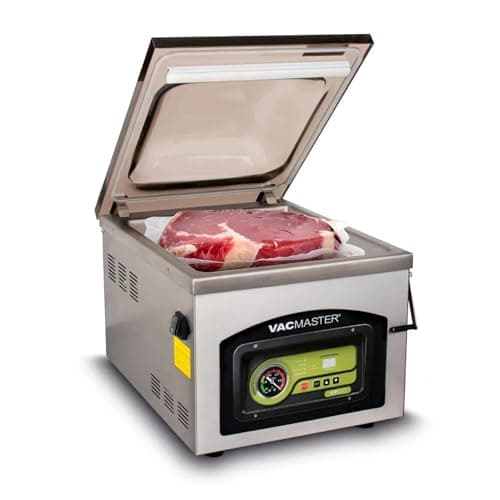
VacMaster VP230: double seals 3 to 7 mil Mylar
See price on AmazonSee it on Amazon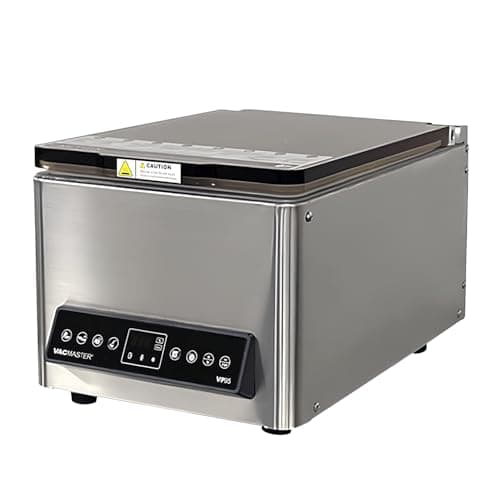
VacMaster VP95: 5 and 7 mil mylar on a compact oil pump
See price on AmazonSee it on Amazon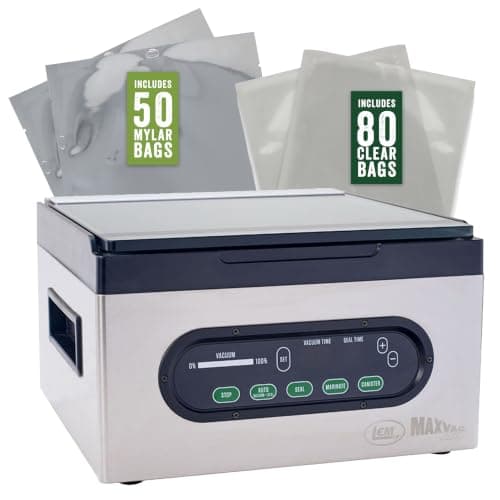
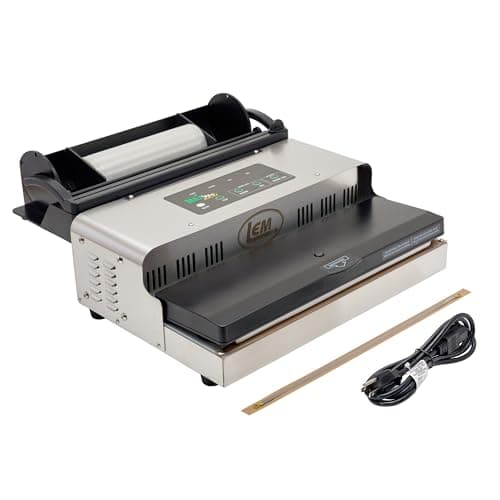
LEM MaxVac Pro: chamber sealer bundled with 50 Mylar bags
See price on AmazonSee it on Amazon
Oxygen absorbers are rated in cc, which means how many cubic centimeters of oxygen each packet can absorb. Getting the size right matters: too small and oxygen stays in the bag, too large just costs more. This page is for anyone packing freeze dried food, dried beans, grains or dehydrated food in jars, mylar bags or buckets. It gives a common sizing chart, shows how to work it out yourself, and covers handling so absorbers still work when you seal the bag.
How oxygen absorber ratings work
An oxygen absorber is a small packet of iron powder that reacts with oxygen. The cc number is the volume of oxygen it can absorb. A 300 cc absorber can take up about 300 cc of oxygen before it is used up.
What matters is the oxygen in the air space inside your sealed container. Air is about 21 percent oxygen. A container with one liter of air in it holds roughly 210 cc of oxygen. Dense foods such as rice leave little air space. Light, airy foods such as freeze dried fruit leave a lot, so they need more absorber for the same bag size.
Oxygen absorber size chart
These are common starting points used by absorber sellers and food storage guides. Use the higher number for light, airy food like freeze dried meals and fruit, and the lower number for dense food like rice and wheat.
Pint jar
Dense food (rice, beans)50 cc
Airy food (freeze dried, pasta)50 to 100 cc
Quart jar or quart mylar bag
Dense food (rice, beans)100 cc
Airy food (freeze dried, pasta)100 to 300 cc
Half gallon jar or bag
Dense food (rice, beans)200 to 300 cc
Airy food (freeze dried, pasta)300 cc
One gallon mylar bag
Dense food (rice, beans)300 cc
Airy food (freeze dried, pasta)300 to 500 cc or more
Five gallon bag or bucket
Dense food (rice, beans)2,000 cc
Airy food (freeze dried, pasta)2,000 to 3,000 cc
| Container | Dense food (rice, beans) | Airy food (freeze dried, pasta) |
|---|---|---|
| Pint jar | 50 cc | 50 to 100 cc |
| Quart jar or quart mylar bag | 100 cc | 100 to 300 cc |
| Half gallon jar or bag | 200 to 300 cc | 300 cc |
| One gallon mylar bag | 300 cc | 300 to 500 cc or more |
| Five gallon bag or bucket | 2,000 cc | 2,000 to 3,000 cc |
Note.Use oxygen absorbers only with dry foods. Food storage guidance from extension services limits them to foods with about 10 percent moisture or less. Low oxygen packaging with moist food can let Clostridium botulinum grow.
Work it out yourself
Example: a one gallon bag loosely filled with freeze dried strawberries might be about two thirds air. That is about 2.5 liters of air, or roughly 530 cc of oxygen. A 500 cc absorber is borderline, so use two 300 cc packets or a larger single packet.
- 1
Find the container volume in liters. One quart is about 0.95 liter; one gallon is about 3.8 liters.
- 2
Estimate how much of that is air after the food is in. Airy freeze dried food can leave half or more as air space.
- 3
Multiply the air space in liters by 210 to get cc of oxygen.
- 4
Round up to the next absorber size you have. Using more than you need does no harm.
- 5
If you are unsure of the air space, assume the whole container is air. That gives a safe upper figure.
Handling absorbers so they still work
Absorbers start working as soon as they touch air. A packet left on the counter for a long time can be used up before it goes into a bag. Work in small batches and keep the rest sealed.
Good absorber packs come with an oxygen indicator, often a small pill that changes color. Check it when you open the pack and again when you close it.
- Fill and line up all bags before you open the absorber pack.
- Take out only the absorbers you can use in the next several minutes.
- Store the remaining absorbers in a small airtight jar or reseal the original bag with a vacuum or heat sealer.
- A good absorber feels soft and powdery. A hard, hot or clumped one is spent.
- Seal bags right after adding the absorber.
Sealing the container
An absorber only works in an airtight container that also blocks oxygen over time. Mylar and glass jars with good lids do this well. Standard vacuum sealer bags let a little oxygen through over the long term, so use mylar for storage measured in years.
Mylar is sealed with heat. An impulse sealer, a clothes iron on a flat board, or a vacuum sealer that can seal mylar all work. See best vacuum sealers for mylar bags and how to vacuum seal mylar bags. Note that you do not need to pull a vacuum on mylar when you use an absorber, though some people do to save space.
Absorbers for freeze dried food
Freeze dried food is light and full of air pockets, so it needs more absorber than the same bag of rice. Pack it as soon as the batch is done, while it is still crisp. Confirm the thickest pieces are dry through before packing, because absorbers do not fix food that is still moist.
Some freeze dryer makers sell absorbers sized for their bags, such as 300 cc and larger packets. The numbers in the chart above line up with those common sizes. For how long well packed food lasts, see how long freeze dried food lasts and our storage life by method tool.
Frequently asked questions
What size oxygen absorber do I need for a gallon mylar bag? Around 300 cc for dense foods and 300 to 500 cc or more for airy freeze dried foods. Round up when in doubt.
Can I use too many oxygen absorbers? Extra absorber capacity does no harm to the food. It only costs more. Too little is the real problem.
How do I know an absorber is still good? A fresh absorber is soft and loose. If it is hard, clumped or warm before you use it, it has already absorbed oxygen.
Can I use oxygen absorbers with moist food? No. Use them only with dry foods. Moist food in a low oxygen package can support botulism bacteria.