Comparison
Electric vs stovetop pressure canner
Published
Short answer
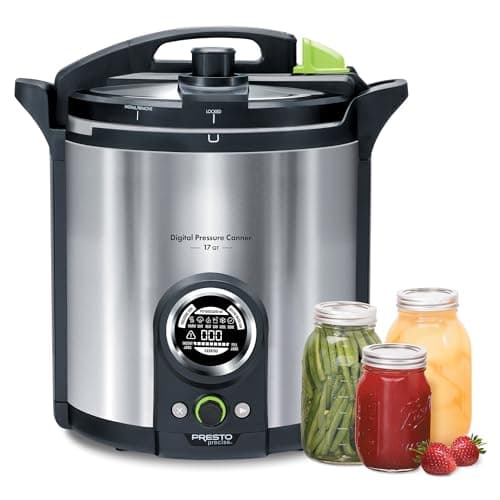
Stovetop pressure canners are the method USDA and NCHFP tested processes were developed with; you adjust the burner and watch a gauge or weight. Electric pressure canners such as Presto's digital models automate heat and timing and free up the stove, but cost about twice as much and rely on the maker's own validation. NCHFP does not recommend electric multicookers for pressure canning. If you want the most established method, buy stovetop; if you value automation, a dedicated electric canner is the option to consider.
Presto
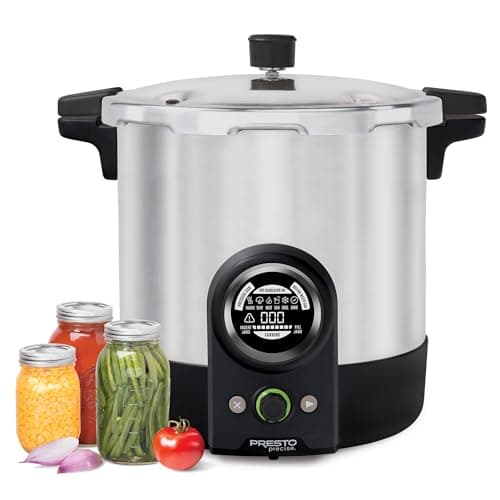
Presto 02153: 23 qt digital canner, 7 quart jars
See price on Amazon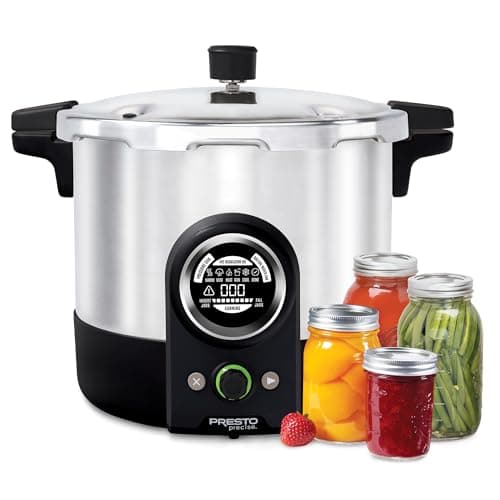
Presto
Presto 02154: 16 qt digital canner, no burner watching
See price on Amazon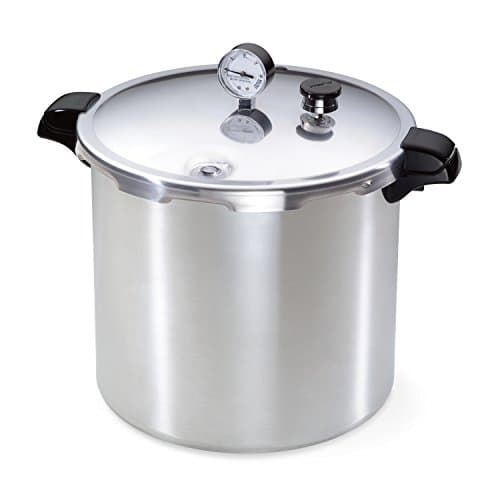
Presto
Presto 01781: 23 qt, 7 quarts, dial gauge
See price on Amazon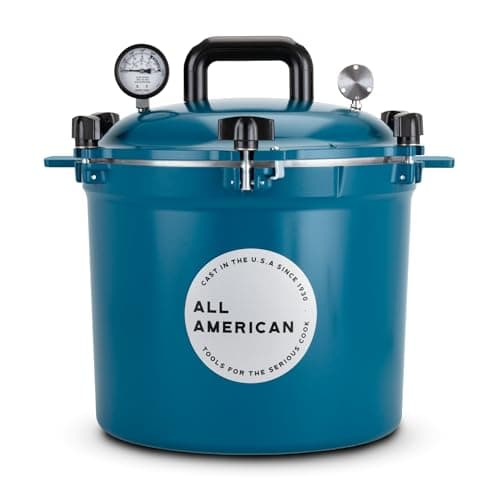
All American
All American 921: 21.5 qt, gasketless metal seal
See price on Amazon
- Presto 02153: 23 qt digital canner, 7 quart jars
- Capacity
- 23 qt
- Jar capacity
- Up to 7 quarts
- Pressure control
- Sensor holds processing temperature
- Heat source
- Electric countertop
- Presto 02154: 16 qt digital canner, no burner watching
- Capacity
- 16 qt
- Jar capacity
- Not stated
- Pressure control
- Sensor holds processing temperature
- Heat source
- Electric countertop
- Presto 01781: 23 qt, 7 quarts, dial gauge
- Capacity
- 23 qt
- Jar capacity
- 7 quarts, 20 pints, 26 half-pints
- Pressure control
- Dial gauge
- Heat source
- Regular and smooth-top ranges
- All American 921: 21.5 qt, gasketless metal seal
- Capacity
- 21.5 qt
- Jar capacity
- 7 quarts or 19 pints
- Pressure control
- Steam gauge plus regulator weight
- Heat source
- Gas, electric or flat top
| Pick | Capacity | Jar capacity | Pressure control | Heat source | Price | Link |
|---|---|---|---|---|---|---|
| Presto 02153: 23 qt digital canner, 7 quart jars | 23 qt | Up to 7 quarts | Sensor holds processing temperature | Electric countertop | - | Amazon |
| Presto 02154: 16 qt digital canner, no burner watching | 16 qt | Not stated | Sensor holds processing temperature | Electric countertop | - | Amazon |
| Presto 01781: 23 qt, 7 quarts, dial gauge | 23 qt | 7 quarts, 20 pints, 26 half-pints | Dial gauge | Regular and smooth-top ranges | - | Amazon |
| All American 921: 21.5 qt, gasketless metal seal | 21.5 qt | 7 quarts or 19 pints | Steam gauge plus regulator weight | Gas, electric or flat top | - | Amazon |
Facts are taken from each Amazon listing. Prices are checked daily and shown with their date.
Verdict
Buy the Presto 01781 stovetop canner for the established method at the lowest price, or the All American 921 for a gasketless seal built to last. Choose the Presto 02153 (23 qt) or 02154 (16 qt) digital canner only if automation matters more to you than batch size and price, and check NCHFP's current guidance first.
This page is for home canners choosing between a traditional stovetop pressure canner and a countertop electric one. We compare convenience, how many jars each holds, price, and what is known about testing, and we state the National Center for Home Food Preservation (NCHFP) position plainly so you can decide with clear eyes. The examples are the Presto 02153 and 02154 digital pressure canners against the Presto 01781 and All American 921 stovetop canners, all from our catalog. Specs come only from the Amazon listings.
How each type controls pressure
A stovetop canner is a heavy pot with a locking lid, a vent, and either a dial gauge, a weighted regulator or both. You vent steam for the time the instructions give, bring the canner to pressure, then adjust the burner to hold that pressure for the full processing time. If pressure drops below the target, you bring it back up and restart the timing. Our how to use a pressure canner page covers each step.
An electric pressure canner has its own heating element and controller. The Presto digital listings describe a sensor that automatically maintains the processing temperature, guided prompts on an LED display, and automatic altitude adjustment. You load jars and water, choose the method and time, and the unit runs the cycle.
What NCHFP says
NCHFP does not recommend electric multicookers (the pressure cooker and slow cooker type appliances, including ones with a canning button) for pressure canning. Its concern is that these units have not been shown to reach and hold the temperatures that the USDA tested processes require, and that heating and cooling times differ from the stovetop canners those processes were built on. See can you pressure can in an Instant Pot for the detail.
Dedicated electric canners such as the Presto digital models are a different product from multicookers: they are built only for canning and hold quart jars. Presto's listings describe the 02144 as meeting USDA guidelines. That is the maker's claim. Before buying, check the NCHFP website for its current statement on dedicated electric canners and follow the maker's manual exactly. The CAREY DPC-9SS in our catalog is a 9.5 quart multicooker with a canning function, which falls into the category NCHFP does not recommend for pressure canning.
Note.Whatever canner you use, follow a current USDA or NCHFP tested recipe for jar size, headspace and processing time. Never improvise times or pressures for low acid foods.
Electric and stovetop models side by side
Size
Presto 02153 digital23 qt
Presto 02154 digital16 qt
Presto 01781 stovetop23 qt
All American 921 stovetop21.5 qt
Quart jars
Presto 02153 digitalUp to 7
Presto 02154 digitalNot stated in the listing
Presto 01781 stovetop7 (plus 20 pints or 26 half-pints)
All American 921 stovetopAbout 7 (or about 19 pints)
Heat source
Presto 02153 digitalBuilt-in, countertop
Presto 02154 digitalBuilt-in, countertop
Presto 01781 stovetopRegular and smooth-top ranges
All American 921 stovetopGas, electric or flat top
Pressure control
Presto 02153 digitalSensor holds temperature automatically
Presto 02154 digitalSensor holds temperature automatically
Presto 01781 stovetopDial gauge
All American 921 stovetopSteam gauge and regulator weight
Altitude
Presto 02153 digitalAutomatic adjustment
Presto 02154 digitalAutomatic adjustment
Presto 01781 stovetopSet by you per USDA chart
All American 921 stovetopSet by you per USDA chart
Water bath mode
Presto 02153 digitalYes
Presto 02154 digitalYes
Presto 01781 stovetopYes
All American 921 stovetopNot stated in the listing
Listed price at writing
Presto 02153 digital$385.00
Presto 02154 digital$339.95
Presto 01781 stovetop$184.99
All American 921 stovetop$499.95
| Spec | Presto 02153 digital | Presto 02154 digital | Presto 01781 stovetop | All American 921 stovetop |
|---|---|---|---|---|
| Size | 23 qt | 16 qt | 23 qt | 21.5 qt |
| Quart jars | Up to 7 | Not stated in the listing | 7 (plus 20 pints or 26 half-pints) | About 7 (or about 19 pints) |
| Heat source | Built-in, countertop | Built-in, countertop | Regular and smooth-top ranges | Gas, electric or flat top |
| Pressure control | Sensor holds temperature automatically | Sensor holds temperature automatically | Dial gauge | Steam gauge and regulator weight |
| Altitude | Automatic adjustment | Automatic adjustment | Set by you per USDA chart | Set by you per USDA chart |
| Water bath mode | Yes | Yes | Yes | Not stated in the listing |
| Listed price at writing | $385.00 | $339.95 | $184.99 | $499.95 |
Convenience against capacity
Convenience is the main reason to buy electric. You do not need to watch a gauge or adjust a burner, the kitchen stays cooler than with a large pot on a burner for an hour or more, and the Presto listings describe guided steps for beginners. It also helps if your cooktop is a glass top that the maker of your stovetop canner does not support; see pressure canning on a glass top stove.
Capacity favors stovetop. The 23 quart Presto 01781 holds 20 pints in one load according to its listing, and larger stovetop canners such as the All American 941 go much bigger. The digital models top out at 7 quart jars in the 23 quart 02153; the 16 quart 02154 listing does not state a jar count. If you put up large garden harvests, a stovetop canner processes more per batch. See what size pressure canner you need.
Long term ownership also differs. A stovetop canner has no electronics; parts like gaskets, overpressure plugs and dial gauges are replaceable, and dial gauges should be tested each season (see pressure canner gauge testing). An electric canner depends on its controller and sensor, so check the warranty terms before buying.
Price
At the listed prices, the digital Presto canners cost roughly twice what the basic Presto 01781 stovetop canner does, and the All American 921 sits above both. You are paying for automation in the electric units and for a gasketless machined metal-to-metal seal in the All American. For more electric options, see the best electric pressure canners.
Who should buy which
Comparing stovetop brands? Read All American vs Presto pressure canner and weighted gauge vs dial gauge.
- Buy stovetop if you want the method USDA processes were developed on, the most jars per batch, or the lowest price.
- Buy a dedicated electric canner if you value automation, need to keep the stovetop free, and accept relying on the maker's validation after checking NCHFP's current guidance.
- Do not use a general multicooker for pressure canning, per NCHFP.
- On induction, check the listing: the Presto 01784 stovetop canner is listed as induction compatible.
Frequently asked questions
Are electric pressure canners safe? NCHFP does not recommend electric multicookers for pressure canning. Dedicated electric canners like Presto's digital line are validated by their maker; check NCHFP's site for its current position and follow the manual exactly.
Can an electric pressure canner do water bath canning? The Presto digital listings say yes, they handle both pressure and boiling water canning.
Do I need to adjust an electric canner for altitude? The Presto digital listings state automatic altitude adjustment. A stovetop canner needs the USDA pressure for your altitude; use the pressure by altitude tool.
What if my stovetop canner keeps losing pressure? Check the gasket, vent and heat setting; see pressure canner losing pressure.