How-to
How to dehydrate herbs
Published
Short answer
Rinse and dry the herbs, lay sprigs or leaves in a single layer on the trays, and dry them at a low temperature, 95 to 115 F per NCHFP guidance, or up to 125 F in humid areas. Most herbs take roughly 1 to 4 hours. They are done when leaves crumble and stems snap. Store whole leaves in airtight containers away from light and heat, and crumble them only when you use them.
Gear for this job
All 7 picks compared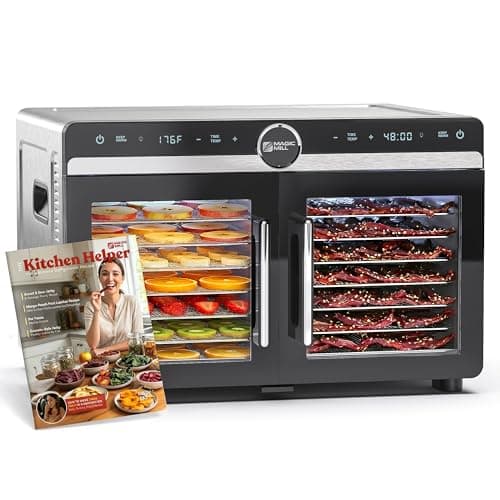
Magic Mill DualZone: 16 trays in two chambers
See price on AmazonSee it on Amazon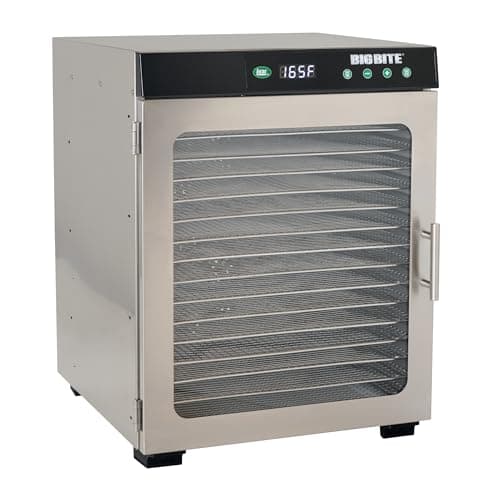
LEM BigBite 16-Tray: 19 sq ft, 1200 watts
See price on AmazonSee it on Amazon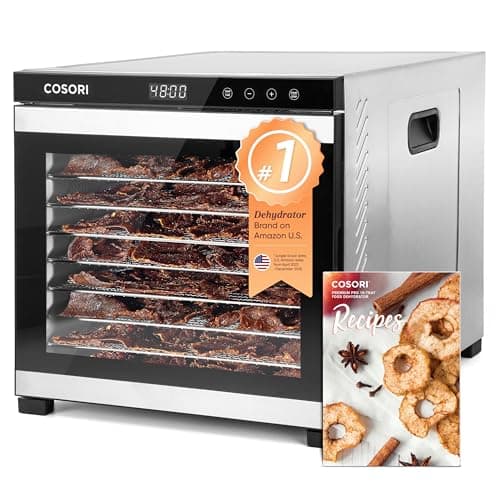
Cosori 10-Tray: 16.2 sq ft of stainless trays
See price on AmazonSee it on Amazon
This page is for gardeners and cooks who want to dry basil, oregano, thyme, mint, parsley and other herbs in a food dehydrator. Herbs are one of the easiest foods to dry, but their aroma comes from volatile oils that fade fast with too much heat. We cover prep, the low temperature settings to use, stem versus leaf drying, how to check doneness and how to store them so they keep color and flavor. If you are still choosing a machine, see our best food dehydrators.
Why low temperature matters
Herbs get their flavor and aroma from volatile oils in their leaves. High heat drives those oils off along with the water, leaving dried herbs that look fine but taste flat. That is why herbs dry at a much lower temperature than fruits or vegetables.
NCHFP recommends preheating the dehydrator to 95 to 115 F for herbs, and up to 125 F in areas with higher humidity. A dehydrator with an adjustable thermostat that goes this low is a must. Some basic units only have one fixed heat setting, which is often too hot for herbs.
Prep: harvest, rinse and dry
Harvest herbs in the morning after the dew dries and before the day gets hot, when their oils are strongest. Many herbs have the best flavor just before they flower.
- 1
Cut healthy stems and discard yellow, damaged or diseased leaves.
- 2
Rinse gently in cool water to remove dirt and insects.
- 3
Shake off water and pat dry or use a salad spinner. Extra surface water lengthens drying time.
- 4
Decide whether to dry on the stem or strip the leaves (see below).
- 5
Lay herbs in a single layer on the trays without overlapping.
Stems or leaves: which way to dry
Small leaved herbs such as thyme, rosemary, oregano and dill are usually easier to dry on the stem. Strip the leaves off once dry by running your fingers down the stem. Large leaved herbs such as basil, mint and sage dry more evenly if you pick the leaves off first, since thick stems take longer than the leaves.
Keep leaves whole when possible. Whole leaves hold their oils better than crumbled ones. Light herbs can blow around in strong airflow; a mesh tray liner keeps them in place.
Thyme, oregano, rosemary, dill
Suggested methodOn the stem
NotesStrip leaves after drying
Basil, mint, sage
Suggested methodLeaves only
NotesThick, juicy leaves; dry in a single layer
Parsley, cilantro
Suggested methodLeaves and tender stems
NotesLose flavor easily; freezing is an alternative
Chives
Suggested methodSnip into short pieces
NotesUse a mesh liner
| Herb | Suggested method | Notes |
|---|---|---|
| Thyme, oregano, rosemary, dill | On the stem | Strip leaves after drying |
| Basil, mint, sage | Leaves only | Thick, juicy leaves; dry in a single layer |
| Parsley, cilantro | Leaves and tender stems | Lose flavor easily; freezing is an alternative |
| Chives | Snip into short pieces | Use a mesh liner |
Drying time and how to tell they are done
NCHFP notes herbs usually dry in about 1 to 4 hours in a dehydrator. Time depends on the herb, leaf thickness, humidity, how full the trays are and your machine. Check every 30 minutes or so after the first hour.
Herbs are done when leaves crumble easily between your fingers and stems break with a snap rather than bending. If any leaves still feel soft or leathery, give them more time. In a stackable round dehydrator, rotate trays partway through so the herbs nearest the heat do not over dry. See dehydrator drying unevenly if some trays finish much faster.
- Leaves crumble when rubbed
- Stems snap cleanly
- Color stays green rather than brown
- No soft spots on thick leaves like basil
Note.Moisture left in herbs can lead to mold in storage. If unsure, dry a little longer at the same low temperature rather than raising the heat.
Storing dried herbs
Let herbs cool for a few minutes, then pack them right away in airtight containers such as small glass jars with tight lids. Store whole leaves and crumble just before cooking. Label each jar with the herb and the date.
Keep jars in a cool, dark cupboard, away from the stove and sunlight. Light and heat fade color and flavor. Check jars over the first few days; if you see condensation inside, the herbs need more drying. Dried herbs are best within about a year for flavor. A vacuum sealer with a jar attachment can help keep larger batches fresh.
- Airtight glass jars with tight lids
- Cool, dark cupboard away from the stove
- Whole leaves, crumbled only at use
- Label with herb name and date
Choosing a dehydrator for herbs
For herbs, the key feature is a thermostat that holds a low temperature, ideally starting at 95 F. Even airflow and enough tray space for a garden harvest help too. Box style units with rear fans dry evenly without tray rotation, and mesh sheets keep small leaves from falling through.
Our best food dehydrators guide covers models with low temperature ranges, and best stainless steel dehydrators covers durable options. For other uses, see what can you dehydrate and our dehydrator temperature chart.
Frequently asked questions
What temperature should I use to dehydrate herbs? NCHFP recommends 95 to 115 F, or up to 125 F in humid areas. Lower temperatures keep more of the aroma.
How long does it take to dehydrate herbs? Usually about 1 to 4 hours, depending on the herb, leaf thickness and humidity. Check often after the first hour.
Should I dry herbs on the stem? Small leaved herbs like thyme and oregano dry well on the stem. Strip large leaves like basil and mint for more even drying.
Why do my dried herbs have no smell? They were likely dried too hot or stored in light or heat, or they are past their best. Dry at the low end of the range and store whole leaves in dark, airtight jars.