Comparison
Horizontal vs vertical airflow dehydrators
Published
Short answer
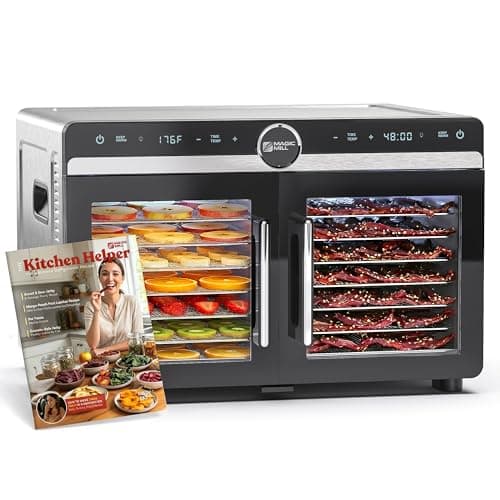
Horizontal airflow dehydrators are boxes with a rear fan that blows warm air across every tray at once, so trays dry at similar rates and you can remove trays for tall items. Vertical airflow dehydrators are stackable round units with a fan in the base or top that pushes air up or down through the stack; they are often cheaper and expandable, but trays farthest from the fan can dry slower and flavors pass through the stack. Pick horizontal for jerky, mixed loads and big batches; vertical for budget and expandability.
Excalibur
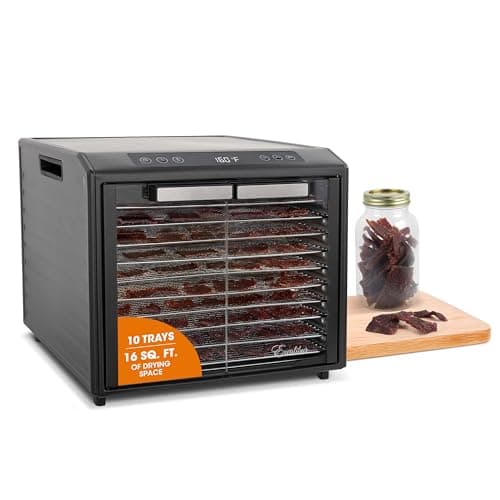
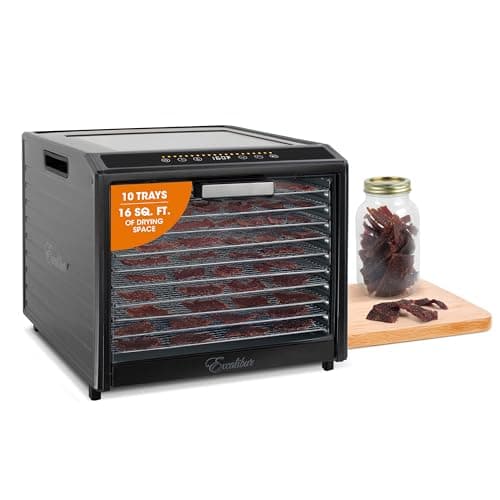
Excalibur Performance 10-Tray: 16 sq ft, stainless
See price on Amazon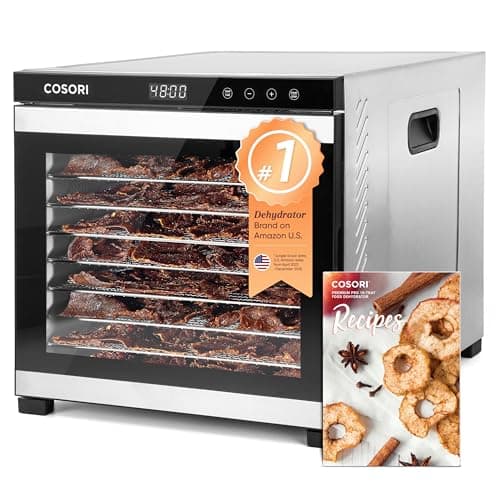
Cosori
Cosori 10-tray: 165 F max, 16.2 sq ft, 1 F steps
See price on Amazon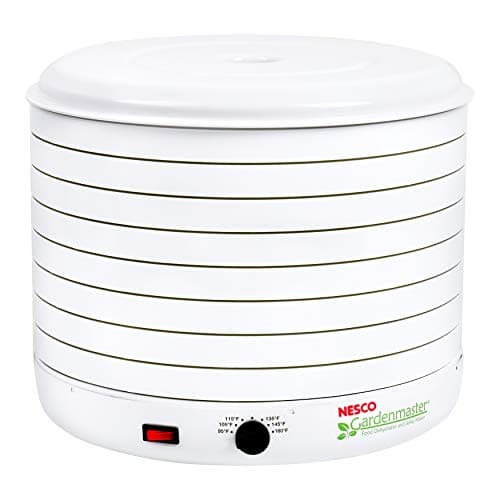
NESCO
NESCO Gardenmaster Pro: 160 F, expands to 30 trays
See price on Amazon
- Excalibur Performance 10-Tray: 16 sq ft, stainless
- Trays
- 10 stainless steel
- Max temp
- -
- Drying space
- -
- Power
- -
- Cosori 10-tray: 165 F max, 16.2 sq ft, 1 F steps
- Trays
- 10 stainless steel, 15.6 x 15 in
- Max temp
- 165 F
- Drying space
- 16.2 sq ft
- Power
- Not stated
- NESCO Gardenmaster Pro: 160 F, expands to 30 trays
- Trays
- 8 BPA-free, expandable to 30
- Max temp
- 160 F
- Drying space
- Not stated
- Power
- 1000W, top-mounted fan
| Pick | Trays | Max temp | Drying space | Power | Price | Link |
|---|---|---|---|---|---|---|
| Excalibur Performance 10-Tray: 16 sq ft, stainless | 10 stainless steel | - | - | - | - | Amazon |
| Cosori 10-tray: 165 F max, 16.2 sq ft, 1 F steps | 10 stainless steel, 15.6 x 15 in | 165 F | 16.2 sq ft | Not stated | - | Amazon |
| NESCO Gardenmaster Pro: 160 F, expands to 30 trays | 8 BPA-free, expandable to 30 | 160 F | Not stated | 1000W, top-mounted fan | - | Amazon |
Facts are taken from each Amazon listing. Prices are checked daily and shown with their date.
Verdict
Buy the Excalibur Performance Series 10-tray if you want horizontal airflow that its listing says needs no tray rotation, plus an 85 to 165 F range and 80 hour timer, or the Cosori 10-tray for similar horizontal capacity at a lower price. Choose the NESCO FD-1018A if budget and expandability to 30 trays matter more than stainless trays.
This page is for anyone choosing between a box-style dehydrator and a stackable round one. We explain how air moves in each design, what that means for even drying, tray rotation, flavor mixing, capacity and price, and how to get even results from either. Our examples are two horizontal units, the Excalibur Performance Series 10-tray and the Cosori 10-tray, and one vertical unit, the NESCO FD-1018A Gardenmaster Pro. All specs come from their Amazon listings.
How air moves in each design
In a horizontal airflow dehydrator, the fan and heater sit at the back of a box. Warm air blows forward across each tray side by side, so every shelf gets air at roughly the same temperature at the same time. The Excalibur listing calls this Horizontal Parallex Air Flow, the Cosori listing describes a rear fan, and the LEM BigBite 16-tray in our catalog lists dual rear-mounted fans with rear venting.
In a vertical airflow dehydrator, round trays stack on a base, and the fan and heater sit in the base or the lid. Air travels up or down through the stack, passing over one tray before reaching the next. Classic stackable units often need trays swapped partway through so the ones farthest from the fan catch up. Some makers address this with ducted designs: the NESCO FD-1018A listing describes a top-mounted fan with a Converga-Flow system that it says dries evenly without tray rotation.
Three dehydrators side by side
Airflow
Excalibur Performance 10-TrayHorizontal (rear)
Cosori 10-TrayHorizontal (rear fan)
NESCO FD-1018AVertical (top-mounted fan)
Trays
Excalibur Performance 10-Tray10 stainless steel
Cosori 10-Tray10 stainless steel, 15.6 x 15 in each
NESCO FD-1018A8 BPA-free, expandable to 30
Drying space
Excalibur Performance 10-Tray16 sq ft
Cosori 10-Tray16.2 sq ft
NESCO FD-1018ANot stated in the listing
Temperature range
Excalibur Performance 10-Tray85 to 165 F
Cosori 10-Tray95 to 165 F
NESCO FD-1018A95 to 160 F
Timer
Excalibur Performance 10-TrayUp to 80 hours
Cosori 10-Tray48 hours, 30 minute steps
NESCO FD-1018ANot stated in the listing
Power
Excalibur Performance 10-TrayNot stated in the listing
Cosori 10-TrayNot stated in the listing
NESCO FD-1018A1000 W
Rotation needed
Excalibur Performance 10-TrayListing says no
Cosori 10-TrayListing claims even drying
NESCO FD-1018AListing says no
Listed price at writing
Excalibur Performance 10-Tray$379.99
Cosori 10-Tray$269.99
NESCO FD-1018A$176.99
| Spec | Excalibur Performance 10-Tray | Cosori 10-Tray | NESCO FD-1018A |
|---|---|---|---|
| Airflow | Horizontal (rear) | Horizontal (rear fan) | Vertical (top-mounted fan) |
| Trays | 10 stainless steel | 10 stainless steel, 15.6 x 15 in each | 8 BPA-free, expandable to 30 |
| Drying space | 16 sq ft | 16.2 sq ft | Not stated in the listing |
| Temperature range | 85 to 165 F | 95 to 165 F | 95 to 160 F |
| Timer | Up to 80 hours | 48 hours, 30 minute steps | Not stated in the listing |
| Power | Not stated in the listing | Not stated in the listing | 1000 W |
| Rotation needed | Listing says no | Listing claims even drying | Listing says no |
| Listed price at writing | $379.99 | $269.99 | $176.99 |
Evenness and tray rotation
Because every tray in a box unit gets air straight from the rear fan, horizontal designs are generally the more even of the two. Food near the back of each tray can still dry a little faster than food at the front, so turning trays front to back once during a long run is a cheap habit that helps any box unit.
Vertical units vary more by model. A basic stackable dehydrator with the fan in the base can leave top trays wetter than bottom ones. Better designs such as the NESCO with its top fan and ducted airflow aim to reduce this. With any stackable unit, check pieces from the top, middle and bottom trays before you call a batch done. Our dehydrator drying unevenly page lists the causes and fixes for both types.
Flavor mixing, capacity and tall items
Flavor mixing. Strong smells such as onions, garlic and jerky marinades travel with the air. In a vertical unit the air passes from tray to tray, so drying onions under apples is a reliable way to get onion-flavored apples. A box unit shares air within one cabinet too, but because air crosses each tray separately before exhausting, mixing tends to be less pronounced. In either type, dry strong foods in their own batch.
Capacity. Box units have a fixed number of trays. The Excalibur and Cosori both list 10 trays and about 16 sq ft. Stackable units can grow: the NESCO listing says it expands from 8 to 30 trays, though more trays means more distance from the fan.
Tall items. In a box you can slide out trays to make room for jars of yogurt, bread proofing or thick items. Stackable trays sit at a fixed spacing unless you buy extra rings or spacers.
Price, materials and safety
Stackable round dehydrators are usually the cheaper way in; the NESCO is listed at $176.99 against $269.99 and $379.99 for the two box units. Box units in our catalog commonly come with stainless steel trays, while many stackable units use BPA-free plastic trays, as the NESCO does.
For jerky, temperature matters more than airflow direction. USDA advises heating meat to 160 F and poultry to 165 F before drying, then drying at a steady temperature. All three units list a maximum of 160 to 165 F. See how to make jerky in a dehydrator and the dehydrator temperature chart.
Note.Home dried jerky keeps about 1 to 2 months at room temperature according to USDA FSIS. Most home dried fruits keep about 1 year at 60 F per NCHFP. Store dried foods airtight, cool and dark.
Which design to buy
For the wider field, see the best food dehydrators and the best Excalibur dehydrators. Still weighing other machines? Read food dehydrator vs air fryer or freeze dryer vs dehydrator.
- Buy horizontal if you dry jerky often, run mixed loads, want stainless trays, or need room for tall items.
- Buy vertical if you want the lowest price, expandable capacity, or a lighter unit you can store away.
- Buy a large horizontal unit for big batches; see the best commercial dehydrators.
Frequently asked questions
Do I need to rotate trays in a horizontal dehydrator? Usually not between shelves, and the Excalibur listing says no rotation is needed. Turning trays front to back once on long runs can still help.
Why is the top tray of my stackable dehydrator still wet? It is farthest from a base-mounted fan, or the stack is too tall. Swap trays partway through or dry fewer trays at once.
Can I dry onions and fruit together? It is best not to in either type, and especially not in a stackable unit where air passes through every tray.
Why is my dried fruit still sticky? It usually needs more time or thinner slices. See dehydrated fruit still sticky.