Fix
Vacuum sealer not pulling a vacuum
Published
Short answer
When a vacuum sealer runs but will not pull air out, the cause is almost always a leak somewhere between the bag and the pump. Check that the bag end sits inside the vacuum channel, the lid is latched, the foam gaskets are clean and seated, the bag is the right textured type with no punctures, and the drip tray is empty and dry. Pump failure is the least likely cause.
Gear for this job
All 7 picks compared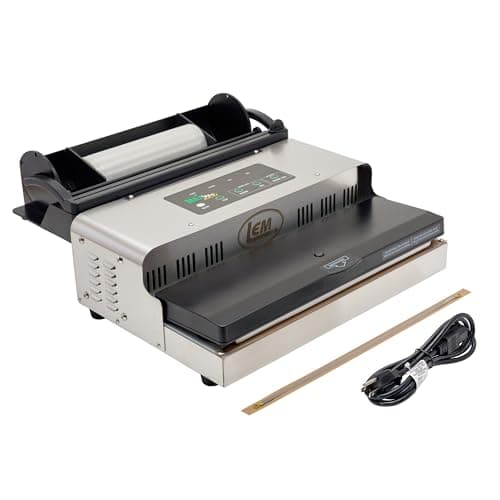
LEM MaxVac 1000: 24 Hg and 1000 seals in a row
See price on AmazonSee it on Amazon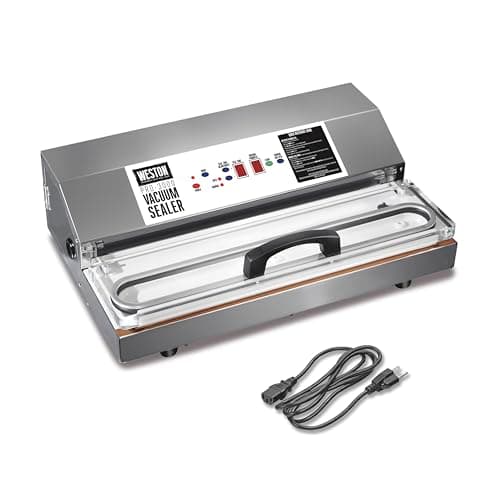
Weston Pro-3000: programmable seal time, 15 in bags
See price on AmazonSee it on Amazon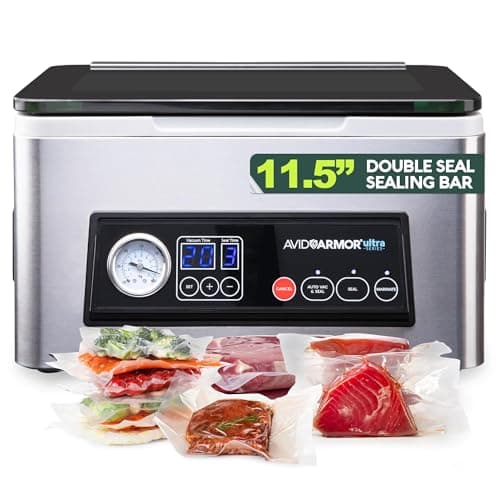
Avid Armor USV20: the chamber alternative
See price on AmazonSee it on Amazon
A vacuum sealer that hums along without pulling the bag tight is frustrating, but most of the time nothing is broken. The pump can only pull a vacuum on a sealed space, so any small leak stops it. This guide is for owners of edge (external) sealers like FoodSaver and Nesco, plus chamber sealers, and works from the quickest checks to the less common causes. If your sealer pulls a vacuum but the seal fails afterward, see vacuum sealer not sealing instead.
Check these first: bag placement and the lid
On an edge sealer, the open end of the bag has to sit inside the vacuum channel or drip tray, past the seal bar, with no folds or wrinkles across the gasket. If the bag end is too short or off to the side, air leaks in around it. Smooth the bag flat across the full width and make sure the lid closes and latches on both sides. Many machines have a lock lever or need firm pressure on both ends until they click.
Leave enough empty bag above the food, typically a few inches, so the bag reaches the channel without stretching. Moisture or crumbs at the opening also break the seal around the gasket.
Causes in order, with fixes
Work down this list. Stop when the sealer starts pulling a firm vacuum again.
Bag not in the vacuum channel
How to checkBag end short of or outside the channel
FixReposition, smooth flat, close lid fully
Lid not latched
How to checkOne side loose, no click
FixPress both ends or use the lock lever
Dirty or misplaced gasket
How to checkGasket twisted, out of groove, crumbs on it
FixClean with warm soapy water, dry, reseat
Worn or compressed gasket
How to checkFlat, cracked or permanently dented foam
FixReplace with the maker's gasket
Smooth bag in an edge sealer
How to checkBag has no texture on one side
FixUse embossed or textured bags
Punctured bag
How to checkBag loses vacuum, bones or sharp edges
FixUse a new bag, pad bones with paper towel
Full or wet drip tray
How to checkLiquid or crumbs in the tray
FixEmpty, wash and dry the tray
Leaky side seal on a bag you made
How to checkAir leaks at the bottom seal
FixReseal the bottom or double seal it
Overheated machine
How to checkWorks at first, then stops
FixLet it cool between bags as the manual says
Pump or hose fault
How to checkNo sound of suction even with good gaskets
FixContact the maker or replace the unit
| Cause | How to check | Fix |
|---|---|---|
| Bag not in the vacuum channel | Bag end short of or outside the channel | Reposition, smooth flat, close lid fully |
| Lid not latched | One side loose, no click | Press both ends or use the lock lever |
| Dirty or misplaced gasket | Gasket twisted, out of groove, crumbs on it | Clean with warm soapy water, dry, reseat |
| Worn or compressed gasket | Flat, cracked or permanently dented foam | Replace with the maker's gasket |
| Smooth bag in an edge sealer | Bag has no texture on one side | Use embossed or textured bags |
| Punctured bag | Bag loses vacuum, bones or sharp edges | Use a new bag, pad bones with paper towel |
| Full or wet drip tray | Liquid or crumbs in the tray | Empty, wash and dry the tray |
| Leaky side seal on a bag you made | Air leaks at the bottom seal | Reseal the bottom or double seal it |
| Overheated machine | Works at first, then stops | Let it cool between bags as the manual says |
| Pump or hose fault | No sound of suction even with good gaskets | Contact the maker or replace the unit |
Gaskets: the most common hardware fix
Most edge sealers have two foam gaskets, one in the lid and one in the base, that form a seal around the vacuum channel. Over time they get compressed, pick up grease and crumbs, or pop partly out of their grooves after cleaning. Pull them out gently, wash them in warm soapy water, let them dry completely, and press them back so they sit evenly with no twists.
If the foam is flat, cracked or stays dented, replace it. Leaving the lid unlatched during storage helps gaskets keep their shape. Replacement gaskets for popular models are usually sold by the maker. Chamber sealers have a lid gasket around the chamber edge; inspect it for nicks and make sure it is fully seated in its channel.
Note.Unplug the sealer before cleaning gaskets or the drip tray, and keep water away from the electrical parts and the heating strip.
Bags: texture, punctures and wet food
Edge sealers need embossed or textured bags. The texture forms tiny air channels that let the pump pull air out from around the food. Smooth bags lie flat against each other and trap air, so the sealer seems to run without effect. Smooth bags are made for chamber sealers; see chamber vacuum sealer bags.
Bones, shell edges, pasta and crisp frozen food can puncture bags. Wrap sharp points in a folded paper towel or use thicker bags. Wet food drawn toward the pump can stop the vacuum and damage the machine. Freeze soups and marinades in a container first, then seal the frozen block, or use a chamber sealer. See how to vacuum seal liquids.
Diagnosis steps for a stubborn sealer
If the basics did not fix it, isolate the problem with an empty bag.
- 1
Unplug, clean and dry both gaskets and the drip tray, then reseat everything.
- 2
Make a fresh bag from a roll and seal the bottom twice.
- 3
Insert the open end into the channel, flat and centered, and latch the lid firmly.
- 4
Run a vacuum and seal on the empty bag. If it pulls tight, the machine works and the issue was bags, food or placement.
- 5
If the empty bag does not pull down, try the accessory port with a canister or hose if your model has one. Suction there but not in the channel points to a gasket or lid problem.
- 6
If there is no suction anywhere, the pump, hose or a valve may have failed. Contact the maker or check warranty coverage.
Chamber sealers that will not reach full vacuum
Chamber sealers vacuum the whole chamber instead of the bag. If the bag does not pull tight, check the lid gasket, make sure the vacuum time setting is long enough, and confirm that the bag opening is inside the chamber and the bag is not sealed already. Oil pump models lose performance when the oil is old or contaminated with moisture. See chamber vacuum sealer not working and chamber vacuum sealer pump oil.
If your edge sealer keeps failing on heavy use, it may simply be worn out. Heavy duty and chamber machines hold up better for large batches.
Frequently asked questions
Why does my FoodSaver run but not suck air? On most FoodSavers it is bag placement, a lid not fully latched, a dirty or misplaced gasket, or a full drip tray. Check those before assuming the pump failed.
Can I use smooth bags in an edge sealer? Usually not. Edge sealers need textured or embossed bags to create air channels. Smooth bags are for chamber sealers.
How often should I replace vacuum sealer gaskets? When they are flat, cracked or no longer spring back. Heavy users replace them more often. Follow the maker's guidance for your model.
Why does the bag lose vacuum after sealing? That is a leak in the seal or a puncture, not a vacuum problem. Check the seal line for wrinkles and the bag for holes.