Explainer
Chamber vacuum sealer bags explained
Published
Short answer
Chamber vacuum sealers use smooth, flat bags, usually a nylon and polyethylene laminate around 3 mil for everyday use and 4 mil or thicker for heavy or bony cuts. Smooth bags cost much less than the embossed bags edge sealers need. Pick a bag narrower than your seal bar and short enough to lie flat in the chamber with the open end across the bar.
Gear for this job
All 8 picks compared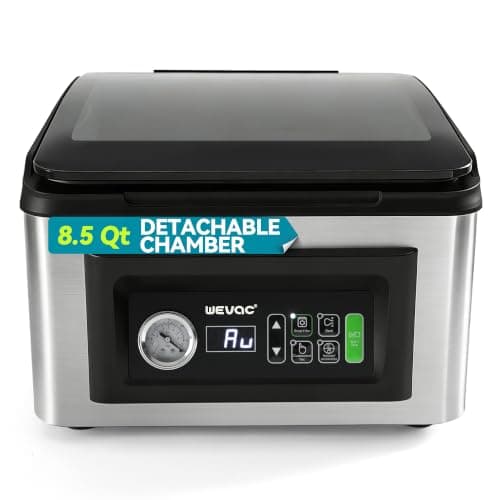
Wevac CV12: 8.5 qt chamber with a 12 in double-wire bar
See price on AmazonSee it on Amazon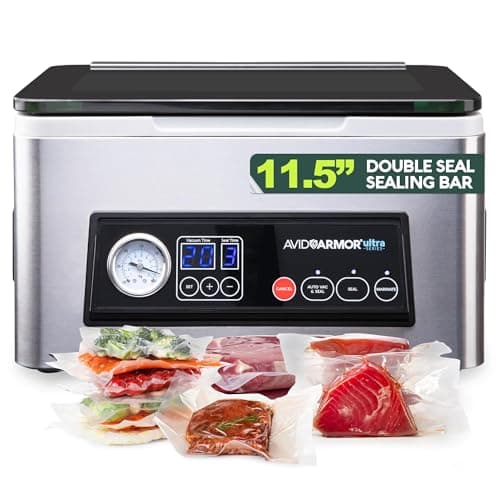
Avid Armor USV20: 11.5 in seal bar in a 14 in wide body
See price on AmazonSee it on Amazon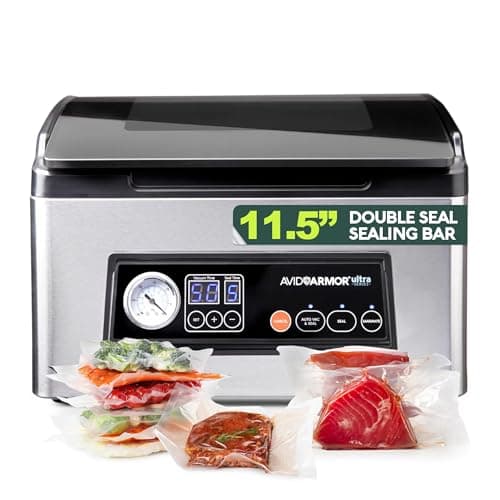
Avid Armor USV32: glass lid and 11.5 in dual-wire bar
See price on AmazonSee it on Amazon
One of the biggest running cost advantages of a chamber vacuum sealer is the bags. Because the whole bag sits inside the chamber, it does not need the textured channels that edge sealer bags use, so plain smooth pouches work and are often sold in bulk. This page covers why chamber bags are smooth, what mil thickness means and when to go thicker, which bags work for sous vide, freezing and boiling, and how to size bags to your seal bar and chamber. It also covers mylar bags and whether you can use embossed bags in a chamber machine.
Why chamber sealers can use smooth bags
An edge sealer pulls air out through the open end of the bag, so the bag needs a textured surface to keep air paths open around the food. A chamber sealer works differently. It removes air from the whole chamber, inside and outside the bag at the same time, then seals the bag while the chamber is still under vacuum. When air rushes back into the chamber, the outside pressure presses the bag tight around the food.
Because pressure is equal on both sides during the vacuum, the bag never needs air channels. Smooth bags work, and liquids stay put instead of being drawn toward a pump. Our explainer on how a chamber vacuum sealer works goes deeper.
Smooth vs embossed bags
Embossed bags work fine in a chamber sealer, so you can finish up a stock of them after upgrading. They just cost more for no gain. The reverse is not true: smooth bags usually trap air in an edge sealer, which is a common reason an edge sealer seems to stop working. See vacuum sealer not vacuuming.
Smooth chamber pouch
Works in chamber sealerYes
Works in edge sealerUsually no
NotesLowest cost per bag, sold in bulk
Embossed or textured bag
Works in chamber sealerYes
Works in edge sealerYes
NotesCosts more; no benefit in a chamber
Mylar or foil bag
Works in chamber sealerOften, check the maker
Works in edge sealerUsually no vacuum, heat seal only
NotesFor light and oxygen blocking storage
Retort or boilable pouch
Works in chamber sealerYes, if rated
Works in edge sealerDepends on texture
NotesCheck the temperature rating on the box
| Bag type | Works in chamber sealer | Works in edge sealer | Notes |
|---|---|---|---|
| Smooth chamber pouch | Yes | Usually no | Lowest cost per bag, sold in bulk |
| Embossed or textured bag | Yes | Yes | Costs more; no benefit in a chamber |
| Mylar or foil bag | Often, check the maker | Usually no vacuum, heat seal only | For light and oxygen blocking storage |
| Retort or boilable pouch | Yes, if rated | Depends on texture | Check the temperature rating on the box |
Mil thickness: 3 mil vs 4 mil and up
A mil is one thousandth of an inch. It describes the total thickness of the bag wall. Thicker bags resist punctures and abrasion better and tend to hold up better through long freezer storage, but they cost more and need a seal bar that can heat through the extra layers.
Many home users keep two sizes on hand: thinner bags for everyday portions, vegetables and sous vide, and thicker bags for bone-in cuts, whole fish or game. Even with thick bags, padding sharp bones with a folded paper towel helps prevent pinholes.
- Around 3 mil: common everyday chamber bag for ground meat, boneless cuts, cheese and leftovers.
- Around 4 mil: a popular step up for freezer storage, heavier cuts and sous vide at longer cook times.
- 5 mil and thicker: bone-in cuts, crab legs and other sharp foods, or long term freezer storage of large pieces.
How to size bags to your seal bar and chamber
Two measurements matter. First, the seal bar length. The bag width must be less than the seal bar so the whole opening seals in one pass. Second, the chamber size. The bag has to lie flat in the chamber with the open end across the seal bar and the food fully inside the chamber, with room for the lid to close.
Leave extra length above the food so the opening reaches the bar without stretching, and so you can cut the bag open later. Bag makers list sizes as width by length in inches. Check your sealer's manual for the largest bag it handles. If you seal tall items or liquids in pouches standing up, some chamber models include a tilted shelf or filler plates to help.
- 1
Measure the usable seal bar length.
- 2
Measure the chamber floor, depth from the bar to the back wall, and the height under the lid.
- 3
Choose bag widths shorter than the seal bar with a little room on each side.
- 4
Choose bag lengths that leave room above the food and still fit the chamber depth.
- 5
Buy a small pack first, test a few seals, then buy in bulk.
Sous vide, freezing and boiling
Most nylon and polyethylene chamber pouches are rated for freezing and for sous vide at typical cooking temperatures. Not all are rated for boiling or simmering. Read the temperature range on the box and use bags labeled boilable for high temperature cooking. Avoid unknown plastics for cooking, and do not microwave a sealed bag unless the bag is made for it and vented.
For freezer storage, a thicker bag helps protect against abrasion as packages slide around. Label each bag with contents and date. For storage times, see how long vacuum sealed meat lasts and freezer burn prevention.
If you seal soups, stocks or marinades, a chamber sealer handles them without first freezing. See how to vacuum seal liquids.
Note.Vacuum sealing does not replace refrigeration. Keep sealed raw meat, fish and cooked food refrigerated or frozen.
Mylar bags in a chamber sealer
Mylar bags block light and oxygen and are popular for dry goods and freeze dried food. Many chamber sealers can vacuum and seal mylar, but the foil layers need enough heat and seal time. Check your sealer's manual, run a test seal, and inspect the seal line for full fusion. Read how to vacuum seal mylar bags for technique.
Frequently asked questions
Can I use FoodSaver bags in a chamber sealer? Yes, embossed bags work in a chamber sealer. They simply cost more than smooth chamber pouches.
Are 4 mil chamber bags worth it? For freezer storage and heavier cuts, many people prefer them for puncture resistance. For quick fridge storage, thinner bags are usually fine.
Why do my chamber bags not seal fully? Check seal time, a clean seal bar, a dry bag opening, and that the bag is flat across the bar. Thicker bags often need a longer seal time.
Can I reuse chamber bags? Some people wash and reuse bags that held dry foods. Do not reuse bags that held raw meat, fish or eggs.