Explainer
How long does vacuum sealed meat last in the freezer and fridge?
Published
Short answer
Frozen at 0 F, vacuum sealed meat stays safe indefinitely according to USDA FSIS. Storage times you see are for best quality, and vacuum sealing helps meat reach the long end of those ranges by preventing freezer burn. In the refrigerator, follow the normal FSIS times, such as 1 to 2 days for raw ground meat and poultry and 3 to 5 days for raw steaks, roasts and chops. Sealing does not make raw meat safe for longer in the fridge.
Gear for this job
All 7 picks compared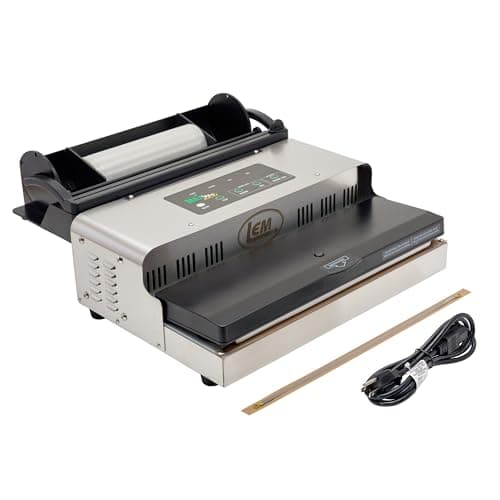
LEM MaxVac 1000: rated for 1000 continuous seals
See price on AmazonSee it on Amazon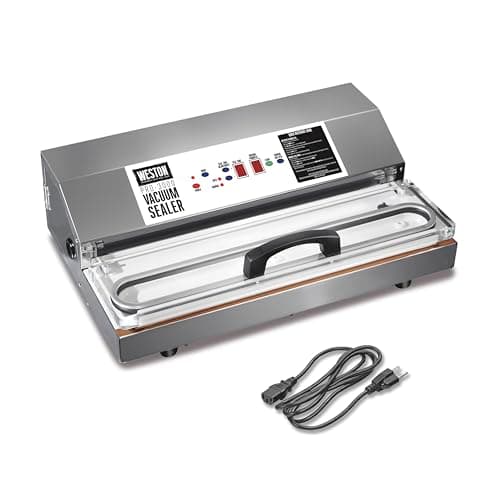
Weston Pro-3000: 1020W, programmable seal, 15 in bags
See price on AmazonSee it on Amazon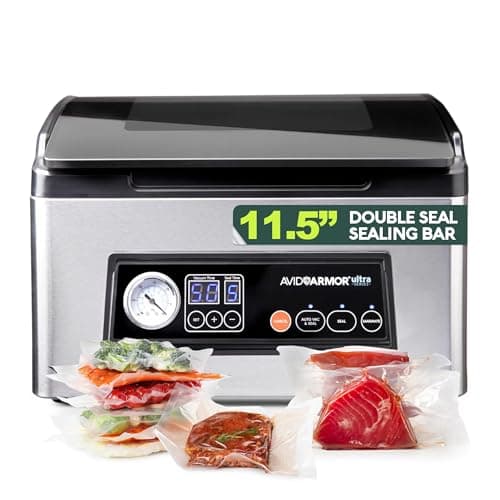
Avid Armor USV32: chamber sealer pitched at hunters
See price on AmazonSee it on Amazon
Vacuum sealer boxes often promise that food lasts several times longer. That is true for quality in the freezer, but it can be misleading for the refrigerator and for food safety. This page uses USDA Food Safety and Inspection Service (FSIS) and FoodKeeper guidance to give realistic freezer and fridge times for common meats, explains what vacuum sealing changes and what it does not, and covers safe thawing, including the special rule for vacuum packed fish. Maker claims are labeled as such.
Freezer: safe indefinitely, quality varies
FSIS states that food kept constantly frozen at 0 F is safe indefinitely, because freezing stops bacteria from growing. Over long storage, though, meat dries out, develops freezer burn and can pick up off flavors, so recommended times are for quality.
The table shows typical FSIS and FoodKeeper freezer times for best quality. Vacuum sealed meat with no air pockets usually holds its quality toward the long end of each range or beyond, because air contact is what drives freezer burn. Claims of multi year quality come from sealer makers, not from USDA.
Raw steaks, roasts, chops (beef, pork, lamb)
Freezer time for best quality4 to 12 months
Raw ground meat
Freezer time for best quality3 to 4 months
Whole chicken or turkey
Freezer time for best qualityUp to 1 year
Chicken or turkey pieces
Freezer time for best qualityAbout 9 months
Bacon and raw sausage
Freezer time for best quality1 to 2 months
Cooked meat and poultry leftovers
Freezer time for best quality2 to 6 months
Lean fish
Freezer time for best quality6 to 8 months
Fatty fish
Freezer time for best quality2 to 3 months
| Food | Freezer time for best quality |
|---|---|
| Raw steaks, roasts, chops (beef, pork, lamb) | 4 to 12 months |
| Raw ground meat | 3 to 4 months |
| Whole chicken or turkey | Up to 1 year |
| Chicken or turkey pieces | About 9 months |
| Bacon and raw sausage | 1 to 2 months |
| Cooked meat and poultry leftovers | 2 to 6 months |
| Lean fish | 6 to 8 months |
| Fatty fish | 2 to 3 months |
Note.Check current FoodKeeper values for specific foods, since FSIS updates its guidance. These are quality times; frozen food kept at 0 F remains safe.
Refrigerator: sealing does not extend safe time
In the refrigerator at 40 F or below, follow the standard FSIS times for raw meat whether or not it is vacuum sealed. Removing oxygen slows some spoilage bacteria, so sealed meat may look and smell fresh longer, but some harmful bacteria, including Listeria and Clostridium botulinum, can grow with little or no oxygen. Looking fine is not the same as being safe.
Commercially vacuum packaged meat has its own use by or sell by dates set by the processor. Home sealed meat does not have that testing behind it, so use the standard times.
Raw ground meat and poultry
Refrigerator time1 to 2 days
Raw chicken or turkey, whole or pieces
Refrigerator time1 to 2 days
Raw steaks, roasts and chops
Refrigerator time3 to 5 days
Raw fish
Refrigerator time1 to 2 days
Cooked meat and poultry leftovers
Refrigerator time3 to 4 days
Bacon (opened)
Refrigerator timeAbout 7 days
| Food | Refrigerator time |
|---|---|
| Raw ground meat and poultry | 1 to 2 days |
| Raw chicken or turkey, whole or pieces | 1 to 2 days |
| Raw steaks, roasts and chops | 3 to 5 days |
| Raw fish | 1 to 2 days |
| Cooked meat and poultry leftovers | 3 to 4 days |
| Bacon (opened) | About 7 days |
What vacuum sealing actually improves
See freezer burn prevention for more ways to protect frozen food, and is a vacuum sealer worth it to decide if one fits your kitchen.
- Frozen at 0 FSafe indefinitely; best quality 1 to 12 months by foodUSDA FSIS
- Vacuum sealedSame freezer times, less freezer burnUSDA FSIS
- Home cannedBest quality within 1 year, cool and darkNCHFP
- Home driedFruit about 1 year at 60 F, 6 months at 80 FNCHFP
- Freeze driedUp to 25 years in mylar with an oxygen absorberMaker claim
- Freezer burn protection. No air pockets means less surface drying and oxidation.
- Better flavor and texture after long freezing. Especially for game, fish and large batches.
- Flat, stackable packages. Faster freezing and thawing, easy labeling.
- Fewer leaks and less cross contamination in the fridge and freezer.
- Ready for sous vide. Meat can go from freezer to water bath in the same bag, following safe cooking temperatures.
Safe thawing, including the fish rule
FSIS lists three safe ways to thaw: in the refrigerator, in cold water changed every 30 minutes with the food in a leak proof package, or in the microwave if you cook it right away. Never thaw meat on the counter.
Vacuum packed fish needs extra care. The FDA advises that fish in reduced oxygen packaging should be removed from the package before thawing, or at least have the package opened, and thawed in the refrigerator, because Clostridium botulinum type E can grow in low oxygen at temperatures above refrigeration. This applies to home sealed fish too.
Note.Do not refreeze meat thawed in cold water or the microwave without cooking it first. Meat thawed in the refrigerator can be refrozen, though quality may drop.
Tips for sealing meat for the freezer
For heavy meat processing, a sealer built for long sessions and thicker bags makes the job easier. See chamber vacuum sealer bags for bag choices.
- 1
Start with fresh meat and seal it soon after purchase.
- 2
Portion into meal sized amounts and pat dry so moisture does not reach the seal.
- 3
Pad sharp bones with a folded paper towel to prevent punctures.
- 4
Prefreeze very wet cuts on a tray for an hour or so before sealing in an edge sealer, or use a chamber sealer.
- 5
Label each bag with contents and date.
- 6
Freeze flat in a single layer, then stack once solid.
- 7
Keep the freezer at 0 F and use older packages first.
Frequently asked questions
How long does vacuum sealed meat last in the freezer? It stays safe indefinitely at 0 F. For best quality, use FSIS times such as 4 to 12 months for steaks and 3 to 4 months for ground meat. Vacuum sealing helps hold quality longer.
How long does vacuum sealed meat last in the fridge? The same as unsealed raw meat: 1 to 2 days for ground meat and poultry, 3 to 5 days for steaks, roasts and chops.
Can vacuum sealed meat go bad in the freezer? It does not become unsafe at 0 F, but it can lose quality, especially if the seal fails or the bag punctures and freezer burn sets in.
Is vacuum sealed meat with an odor when opened safe? Sealed meat can have a mild odor that fades after a few minutes. A strong, persistent off smell, slime or a bloated bag means discard it.