Explainer
Is a vacuum sealer worth it?
Published
Short answer
A vacuum sealer is worth it if you buy meat in bulk, process game or fish, cook sous vide, or freeze a lot of prepared food. Removing air greatly reduces freezer burn and keeps frozen food tasting better for longer. If you freeze a few things a month, good freezer bags with the air pressed out will do most of the job for much less.
Gear for this job
All 7 picks compared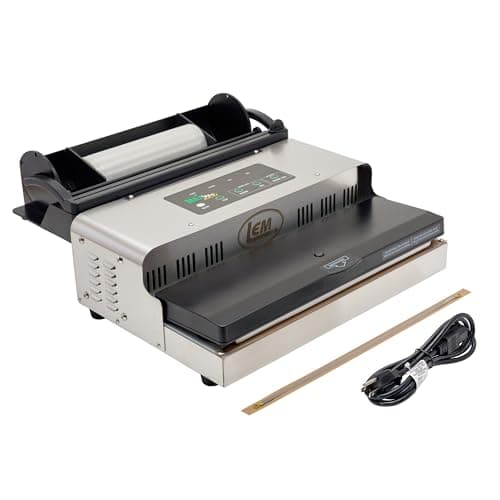
LEM MaxVac 1000: 24 Hg and 1000 seals in a row
See price on AmazonSee it on Amazon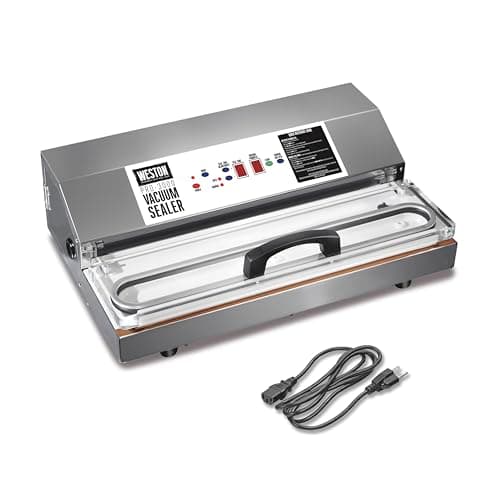
Weston Pro-3000: programmable seal time, 15 in bags
See price on AmazonSee it on Amazon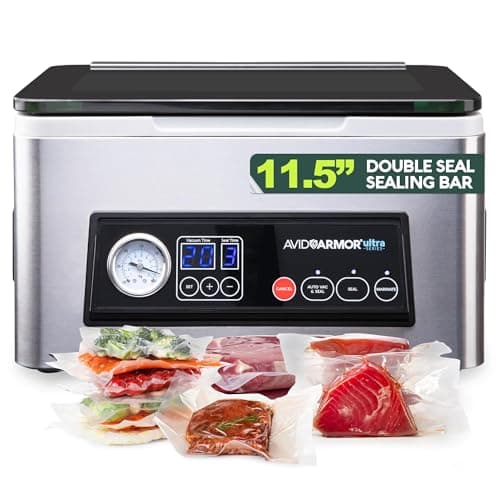
Avid Armor USV20: the chamber alternative
See price on AmazonSee it on Amazon
A vacuum sealer removes air from a bag and heat seals it, which protects food from the dry freezer air that causes freezer burn. That sounds useful for everyone, but the value depends on how much you store and what you store. This page is for anyone deciding whether to buy one and which type: what a vacuum sealer actually does, the uses that make it pay off, the uses where it adds little, the running costs, and the difference between edge and chamber sealers. It also covers what vacuum sealing does not do for food safety.
What a vacuum sealer actually does
The main benefit is quality. Freezer burn happens when moisture leaves the surface of frozen food and dry, oxidized patches form. A tight vacuum seal with no air pockets slows that a lot, so frozen meat, fish and vegetables keep their color, texture and flavor longer than in loosely wrapped packaging.
Vacuum sealed packages are also flat, uniform and easy to stack, label and thaw. And sealed bags are the standard for sous vide cooking, because the bag sits tight against the food for even heat transfer.
What vacuum sealing does not do is make perishable food shelf stable. USDA FSIS guidance is that vacuum packaging is not a substitute for refrigeration or freezing. Some harmful bacteria grow without oxygen, so sealed raw meat, fish and cooked food still need the fridge or freezer.
Uses that make a vacuum sealer worth it
If two or more of these describe you, a vacuum sealer will likely get regular use.
- Bulk meat. Buying family packs, a quarter or half of beef, or warehouse club cuts, and splitting them into meal portions for the freezer.
- Hunting and fishing. Game and fish often go into the freezer in large amounts and stay there for months. See the best vacuum sealers for meat.
- Sous vide cooking. A sealer gives tight bags without the water displacement trick.
- Garden produce. Blanched vegetables and berries frozen flat in portions.
- Meal prep and leftovers. Soups, sauces and cooked dishes portioned and frozen. Liquids are easiest in a chamber sealer.
- Dry goods and freeze dried food. Keeping flour, coffee, nuts or freeze dried food protected from air and moisture, often in mylar bags.
When it often is not worth it
If you freeze a few items a month and use them within weeks, freezer burn may never have time to set in. A zip top freezer bag with the air pressed out works well for short storage, and it costs far less than a sealer plus bags.
Small kitchens with little counter space, people who rarely cook meat, and households that shop several times a week often find a sealer ends up in a cupboard. Budget edge sealers can also frustrate heavy users, since they may need cool down time between bags and wear their gaskets out.
Bags are an ongoing cost. Embossed bags for edge sealers cost more per bag than smooth chamber pouches, which matters if you seal in large volumes.
Edge sealer or chamber sealer
Edge sealers are smaller and cheaper. The bag hangs out of the machine and air is pulled through the open end, so they need textured bags and struggle with liquids. Chamber sealers put the whole bag inside a chamber, handle soups and marinades, use cheaper smooth bags, and are built for long sessions, but they are heavy and cost more.
A simple rule: occasional to moderate use with mostly solid food suits a heavy duty edge sealer. Big batches, liquids, game processing or daily use point to a chamber sealer.
Bags
Edge sealerTextured or embossed
Chamber sealerSmooth or embossed
Liquids
Edge sealerDifficult, freeze first
Chamber sealerHandled directly
Size and weight
Edge sealerCompact, light
Chamber sealerLarge, heavy
Back to back sealing
Edge sealerOften needs cool down time
Chamber sealerBuilt for long sessions
Upkeep
Edge sealerGaskets
Chamber sealerGaskets, pump oil on oil pump models
| Edge sealer | Chamber sealer | |
|---|---|---|
| Bags | Textured or embossed | Smooth or embossed |
| Liquids | Difficult, freeze first | Handled directly |
| Size and weight | Compact, light | Large, heavy |
| Back to back sealing | Often needs cool down time | Built for long sessions |
| Upkeep | Gaskets | Gaskets, pump oil on oil pump models |
How to decide in five questions
Mostly yes means a sealer is likely to pay for itself in better quality food and less waste. Mostly no means freezer bags are probably enough for now. For a deeper comparison read chamber vacuum sealer vs edge vacuum sealer and chamber vacuum sealer vs FoodSaver.
- 1
Do you freeze meat, fish or game in quantities that stay frozen longer than a couple of months?
- 2
Do you cook sous vide or want to?
- 3
Do you buy in bulk to save money or reduce trips?
- 4
Do you need to seal liquids or very large batches? If yes, look at chamber sealers.
- 5
Do you have counter or cupboard space and a budget for bags?
Food safety reminders
Keep sealed perishable food at 40 F or below in the fridge or at 0 F in the freezer. Do not seal and store raw garlic, fresh herbs in oil, or low acid foods at room temperature, because the low oxygen environment can let Clostridium botulinum grow. When thawing vacuum packed fish, the FDA advises opening the package or keeping it refrigerated while it thaws. For storage times see how long vacuum sealed meat lasts.
Note.Vacuum sealing slows quality loss but does not kill bacteria or make perishable food safe at room temperature.
Frequently asked questions
Does vacuum sealing make food last longer? In the freezer, it mainly protects quality by preventing freezer burn. In the fridge, it does not extend safe storage times for raw meat by much, so follow the usual refrigerator times.
What is the purpose of a vacuum sealer? To remove air from packaging so food keeps its quality longer, to make neat freezer portions, and to prepare food for sous vide.
What vacuum sealer should I buy? For moderate use, a heavy duty edge sealer. For liquids, game processing or big batches, a chamber sealer.
Are vacuum sealer bags expensive? Embossed bags for edge sealers cost more than smooth chamber bags. Heavy users often save on bags with a chamber sealer.