Fix
Freezer burn: what causes it and how to stop it
Published
Short answer
Freezer burn happens when frozen food loses moisture to dry freezer air and its surface oxidizes, leaving dry, gray or white leathery spots. The USDA says freezer burned food is safe to eat but lower in quality. Prevent it by removing air from the package, using moisture proof packaging such as vacuum sealer bags, and keeping the freezer at a steady 0 F.
Gear for this job
All 7 picks compared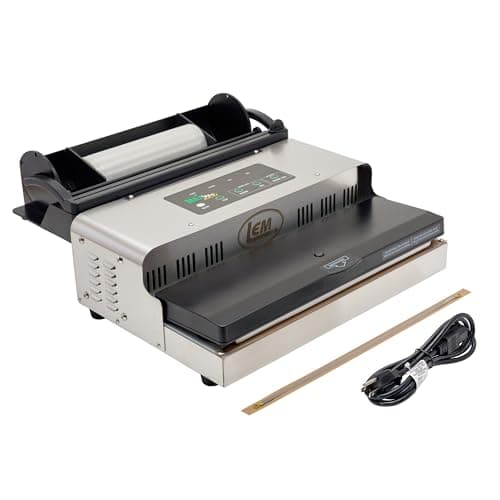
LEM MaxVac 1000: 24 Hg and 1000 seals in a row
See price on AmazonSee it on Amazon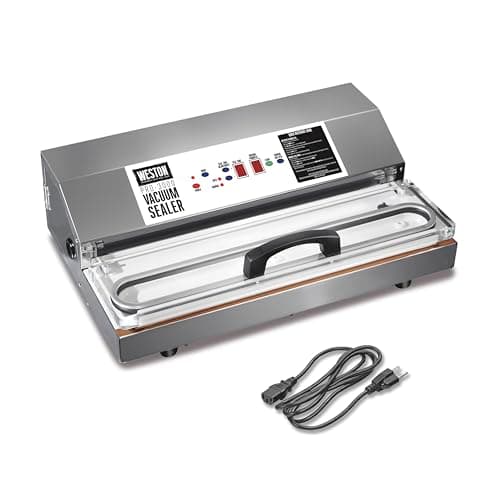
Weston Pro-3000: programmable seal time, 15 in bags
See price on AmazonSee it on Amazon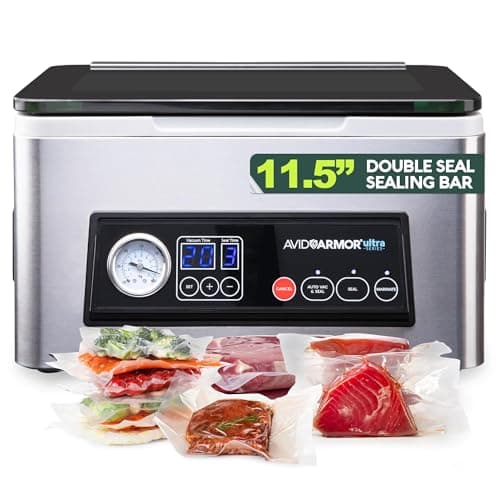
Avid Armor USV20: the chamber alternative
See price on AmazonSee it on Amazon
If you have pulled out a steak with gray, dry patches or a tub of ice cream covered in ice crystals, you have seen freezer burn. This page explains what causes it, whether the food is still safe, and how to prevent it with better packaging, better freezer habits and, most effectively, a good vacuum seal. It is for anyone who freezes meat, fish, vegetables or leftovers and wants them to taste right months later.
What causes freezer burn
Freezer air is very dry. Ice at the surface of frozen food slowly turns straight into vapor, a process called sublimation, and moves into the air in the package or the freezer. The surface left behind is dry and spongy. Oxygen in contact with that surface then changes its color and flavor.
Two things drive it: air touching the food, and temperature swings. Air gaps in the package give moisture somewhere to go. Each time the freezer warms and cools, moisture moves out of the food and refreezes as frost inside the package.
Is freezer burned food safe to eat?
Yes. USDA FSIS states that freezer burn does not make food unsafe; it is a quality problem. Food kept constantly at 0 F stays safe indefinitely, though quality drops over time. Freezer burned areas are dry and can taste stale or bland.
Cut away heavily freezer burned spots before or after cooking. Lightly affected meat works well in stews, soups and sauces where moisture is added back. If food smells off after thawing, or was not kept frozen, throw it out.
Causes and fixes at a glance
Air left in the package
FixVacuum seal, or press out air before closing
Thin or loose packaging
FixUse moisture proof freezer bags or vacuum bags
Torn or punctured bag
FixWrap bones and sharp edges; double wrap
Freezer warmer than 0 F
FixSet to 0 F or below; check with a thermometer
Temperature swings
FixLimit door openings; avoid frost free cycling near food
Slow freezing of large batches
FixFreeze in flat, thin packages; do not overload
Storing too long
FixLabel and date; use within USDA quality times
| Cause | Fix |
|---|---|
| Air left in the package | Vacuum seal, or press out air before closing |
| Thin or loose packaging | Use moisture proof freezer bags or vacuum bags |
| Torn or punctured bag | Wrap bones and sharp edges; double wrap |
| Freezer warmer than 0 F | Set to 0 F or below; check with a thermometer |
| Temperature swings | Limit door openings; avoid frost free cycling near food |
| Slow freezing of large batches | Freeze in flat, thin packages; do not overload |
| Storing too long | Label and date; use within USDA quality times |
Prevention step by step
- 1
Cool cooked food quickly in the refrigerator before freezing so it does not warm nearby items.
- 2
Portion food into amounts you will use at once.
- 3
Pack it in moisture and vapor resistant packaging. Vacuum sealer bags are the most effective; heavy freezer bags with air pressed out are next.
- 4
Remove as much air as possible. Vacuum seal, or lay the bag flat and press air out before closing.
- 5
Freeze packages flat in a single layer so they freeze quickly, then stack them.
- 6
Label each package with the food and date.
- 7
Keep the freezer at 0 F or below and check it with an appliance thermometer.
- 8
Use older packages first.
Why vacuum sealing is the biggest fix
Vacuum sealing removes the air pocket where moisture would collect as frost, and it presses the bag tight against the food so there is nowhere for vapor to go. Vacuum bags are also thicker and less permeable than thin produce bags or plastic wrap. That is why vacuum sealed meat and fish usually stay free of freezer burn much longer than the same food in a zip top bag.
A good seal matters. A small leak lets air back in and undoes the benefit. If your bags go loose in the freezer, see vacuum sealer not sealing. For sealers that hold up to big batches of meat, see best vacuum sealers for meat and best vacuum sealers.
- Frozen at 0 FSafe indefinitely; best quality 1 to 12 months by foodUSDA FSIS
- Vacuum sealedSame freezer times, less freezer burnUSDA FSIS
- Home cannedBest quality within 1 year, cool and darkNCHFP
- Home driedFruit about 1 year at 60 F, 6 months at 80 FNCHFP
- Freeze driedUp to 25 years in mylar with an oxygen absorberMaker claim
How long frozen food keeps its quality
Even well wrapped food slowly loses quality. USDA FSIS publishes freezer storage times for best quality. Some examples: raw ground meat 3 to 4 months, steaks and roasts 4 to 12 months, whole chicken or turkey 12 months, and soups and stews 2 to 3 months. Vacuum sealing helps food reach the end of those ranges in better shape. It does not change the safety rules.
Our storage life by method tool lists the FSIS times by food. For vacuum sealed meat specifically, see how long vacuum sealed meat lasts.
Note.Thaw frozen food in the refrigerator, in cold water changed every 30 minutes, or in the microwave if you will cook it right away. Do not thaw perishable food on the counter.
Frequently asked questions
What does freezer burn look like? Dry, leathery patches that are gray, white or brownish on meat, or ice crystals on and inside the package of ice cream and vegetables.
Can you eat freezer burned meat? Yes, according to USDA FSIS it is safe, but the burned areas will be dry. Trim them off or use the meat in a moist dish.
Does vacuum sealing prevent freezer burn? It is the most effective way, because it removes the air around the food and uses thicker, low permeability bags.
What freezer temperature prevents freezer burn? Keep the freezer at 0 F or below and avoid temperature swings. A stable temperature matters as much as a low one.